What is the liminal?
THE LIMINAL is a time, space, or state of being that's betwixt and between — neither here nor there.
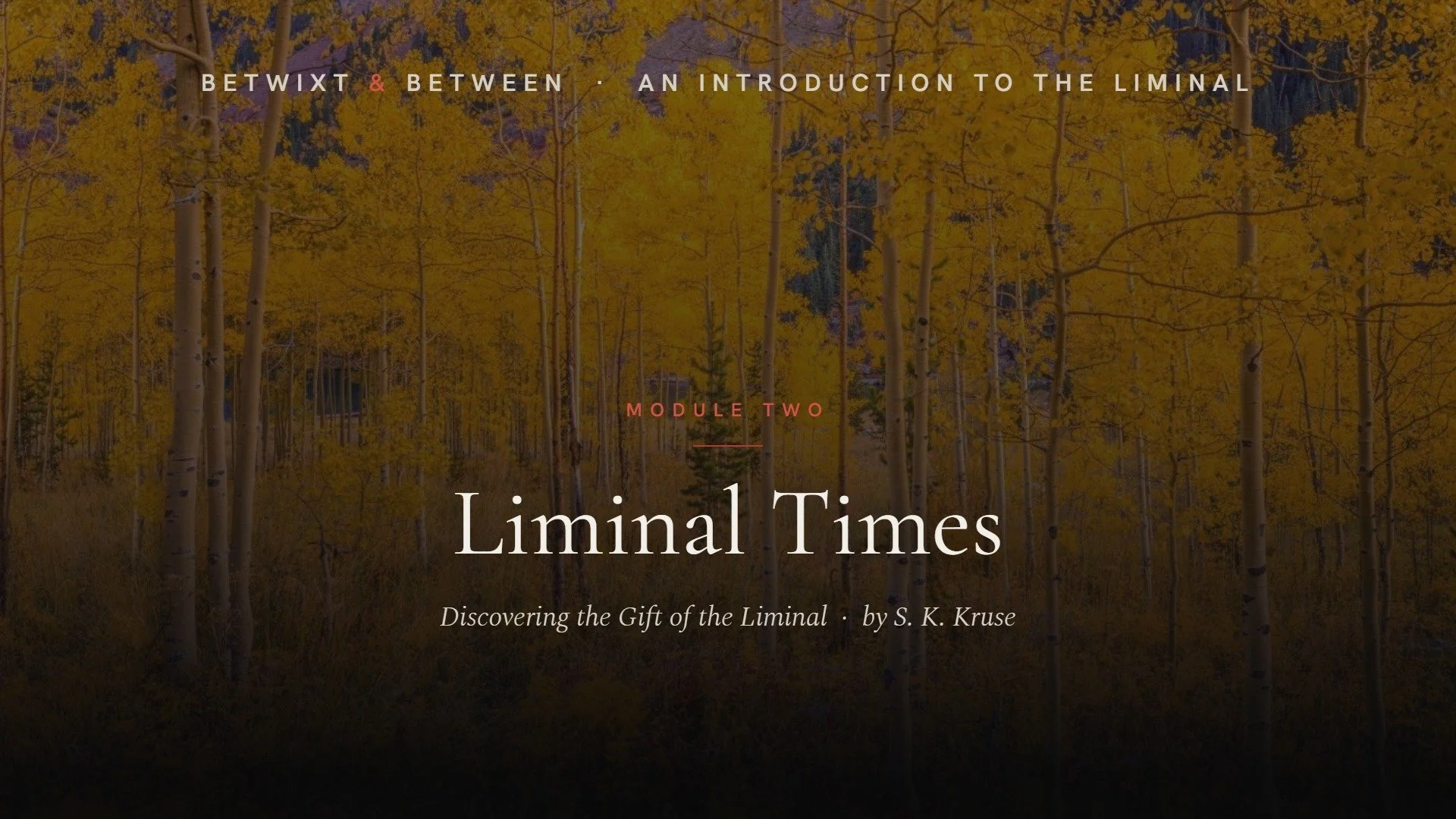
If it's a time, it might be dawn or dusk, an anniversary or holiday, or the turning of the year.
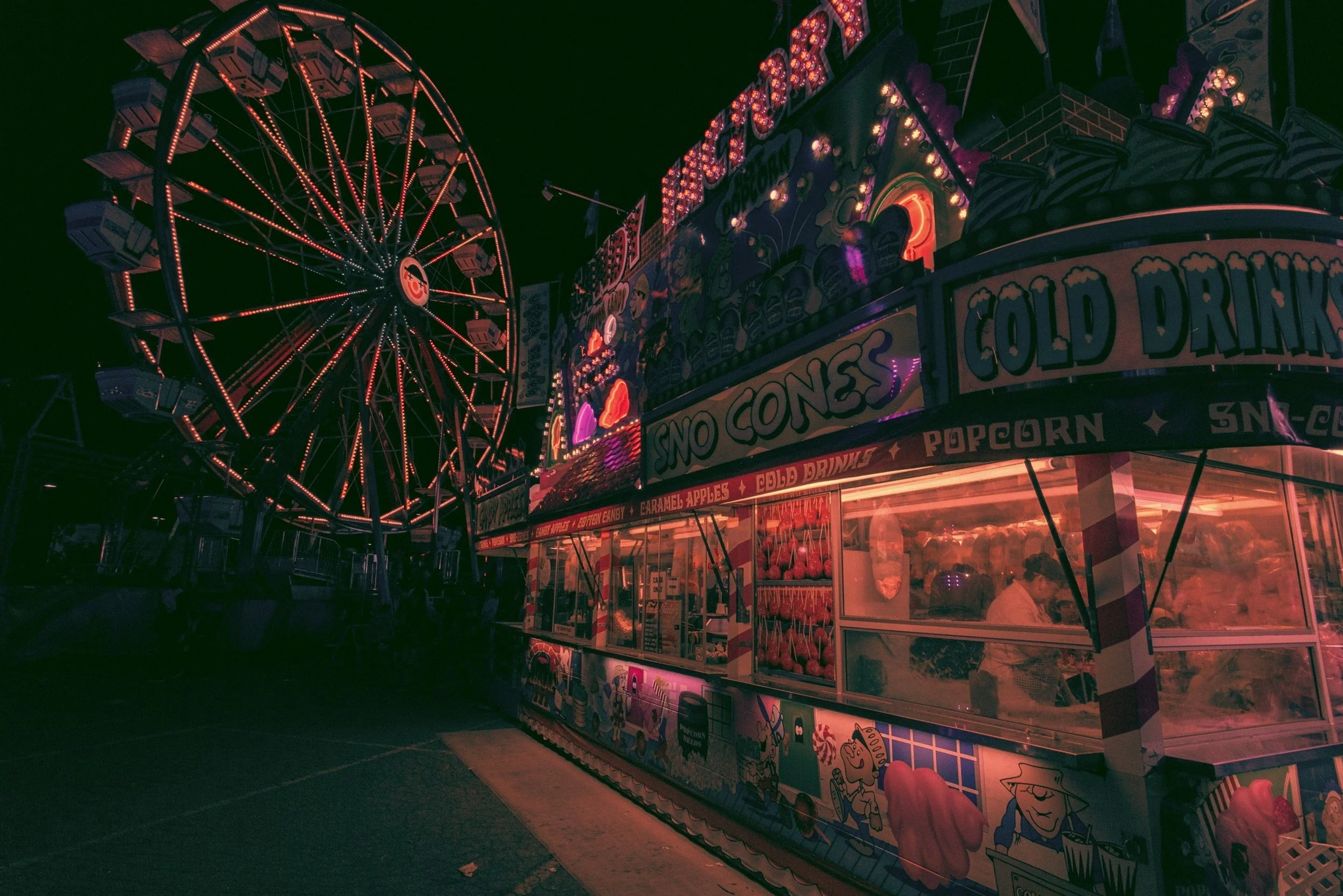
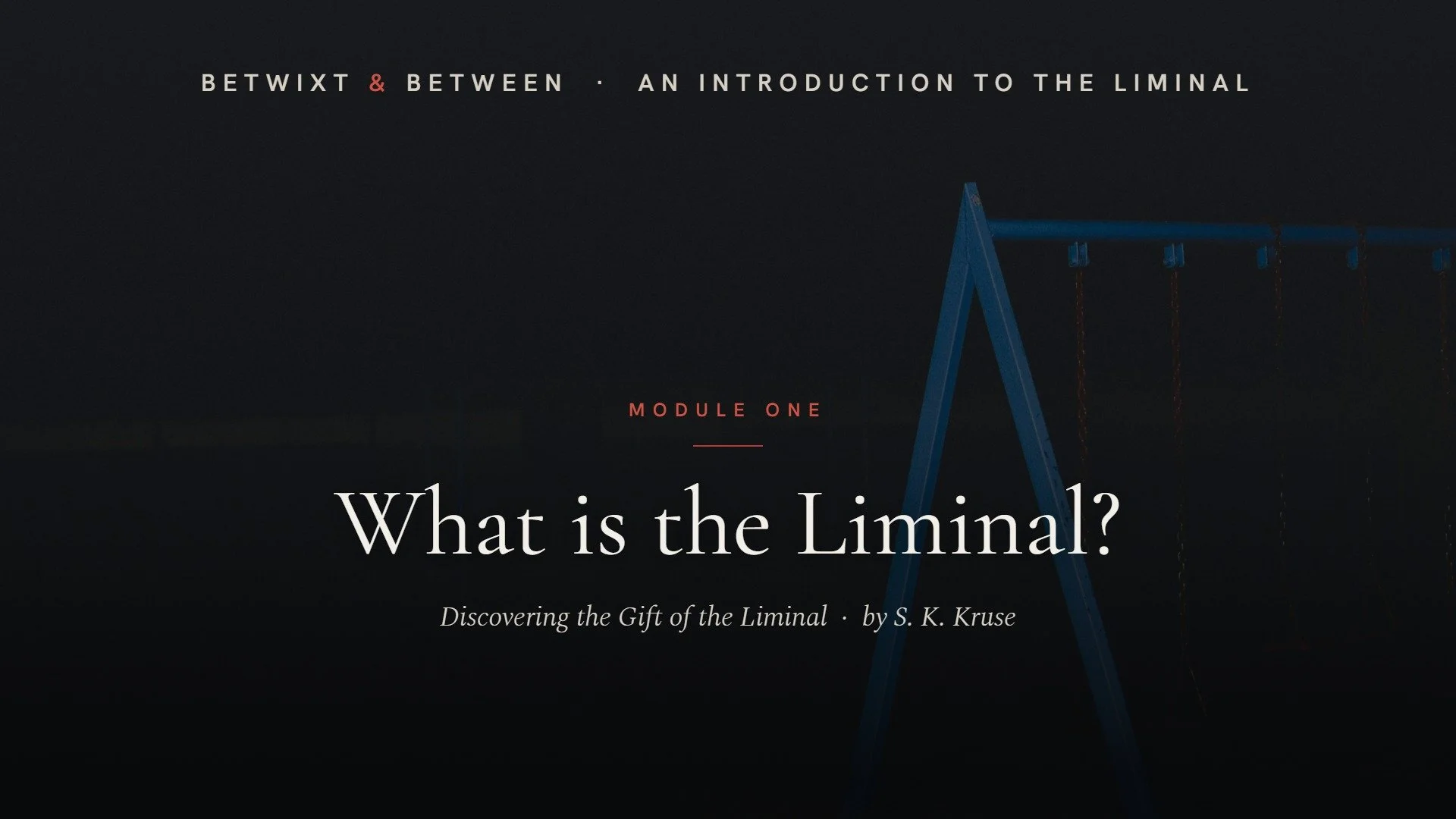
If it's a space, it might be a staircase, airport, or an empty playground.
If it's a state of being, it might be the experience of not fitting into the world's tidy categories, or feeling like you no longer fit into your own tidy categories but are unable to find your way out of them yet.
If this is the case, you didn't end up there by accident.
Something new is emerging, and for that to happen, something old needs to fall away.
Darkness, confusion, and disorientation are to be expected.
Just make sure you let the liminal do its work in you.
You'll be glad you did.
the Liminal Hub
Welcome! You’ve landed in the perfect spot for all things liminal. The essays and resources here are based on my presentation Betwixt & Between: Discovering the Gift of the Liminal. You can download the eight-module HTML presentation above, or peruse the material below in the Hub, where I’ve embedded the modules and provided an overview with links to expanded essays.
Please also feel free to download the Betwixt & Between Resource Packet, which I designed to help you bring the transformative concept of the liminal to your organization, community, or classroom.
If you’d like to host me for a presentation of this material or other offerings, reach out below.
Prefer a Visual Journey?
Click through the presentation below. (Or scroll to keep reading.)
Betwixt and Between: The Origins of Liminality
The word liminal comes from the Latin limen,
meaning threshold.
The modern study of liminality begins with the French ethnographer Arnold van Gennep.
In 1909, van Gennep published The Rites of Passage, a study of the rituals cultures use to mark important changes in human life: birth, initiation, coming of age, marriage, death, and other passages from one social condition into another.
Van Gennep noticed that these rituals often follow the same three-part movement.
The Three Stages of a Rite of Passage
Separation
The person leaves behind a former identity, role, community, or way of life.The liminal phase
The person enters the uncertain threshold between the old condition and the new.Reintegration
The person returns to the community with a new identity or status.
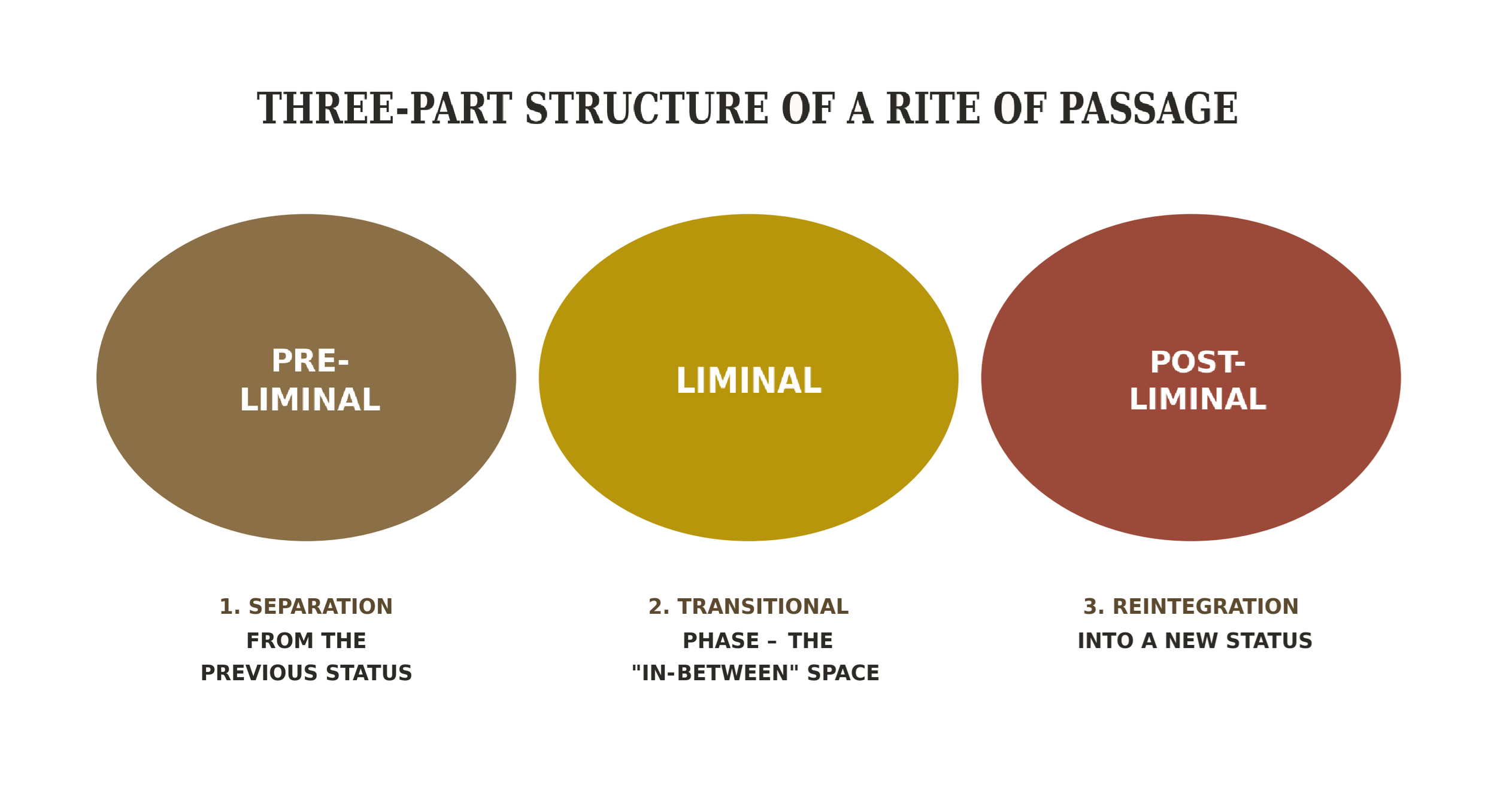
Van Gennep’s Three Stage Model of Liminality
A few decades later, the anthropologist Victor Turner took up van Gennep’s idea and found the perfect old phrase for the threshold condition:
Betwixt and between.
The words had been circulating in English for centuries, but Turner gave them a new intellectual life by using them to describe those who were no longer what they had been and not yet what they would become.
Turner saw that the threshold was not merely an empty hallway connecting two important rooms. It possessed a peculiar power of its own.
Ordinary structures weakened there.
Familiar labels no longer worked.
Relationships and possibilities could emerge that had been concealed by the established order.
In other words, the confusion was not necessarily a flaw in the process.
The confusion was part of the process.
You can read more about Arnold van Gennep, Victor Turner, rites of passage, and communitas in “Arnold van Gennep, Victor Turner, and the Origins of Liminality.”
Liminality in Time, Space, and sTATES OF Being
Once you have a word for the liminal, you begin seeing it everywhere—which is either illuminating or mildly alarming.
The liminal reveals itself in three principal ways:
in time
in space
in states of being
These forms overlap, but each carries its own atmosphere.
Liminal Times
Prefer a Visual Journey?
Click through the presentation below. (Or scroll to keep reading.)
Some moments in time feel different from the rest.
The hush before sunrise.
The long, golden ache of dusk.
Midnight.
New Year’s Eve.
The first cold morning when summer has unmistakably turned.
These are seams in time. Intervals when one order is fading and another has not fully arrived. The light itself is transitional. The world seems to pause between breaths.
Many religious and cultural calendars gather rituals around such moments. Vigils precede feast days. Bells mark the passage of hours. Fires are lit at the turning of the year. Festivals interrupt ordinary time and briefly loosen the rules by which everyday life is governed.
They return predictably with the movement of the earth.
They arrive whether we have prepared for them or not.
Liminal Spaces
Prefer a Visual Journey?
Click through the presentation below. (Or scroll to keep reading.)
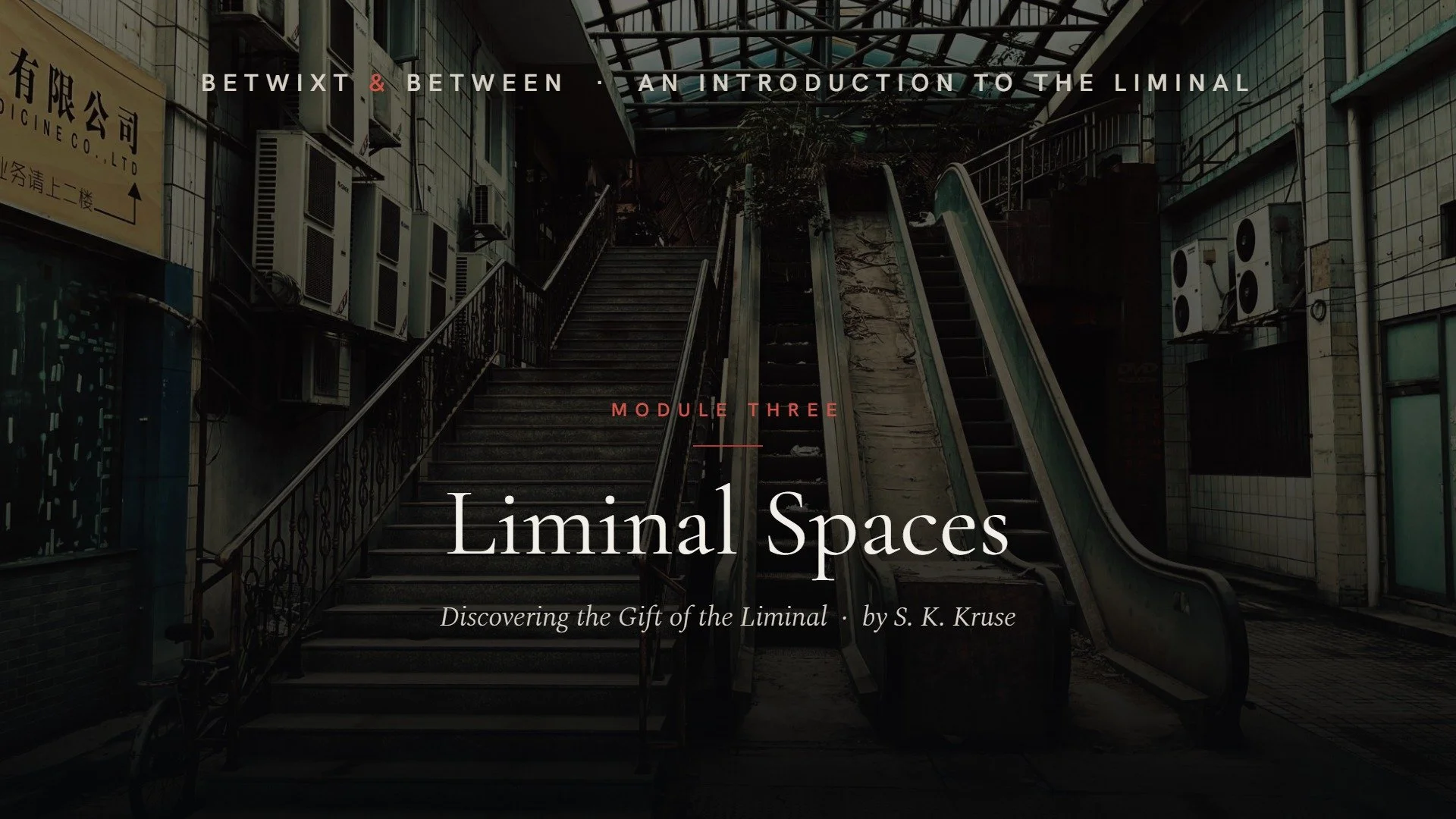
Airports, staircases, bridges, doorways, waiting rooms, borders, hotel corridors, shorelines, empty schools, and abandoned shopping malls can all feel liminal.
They are spaces of passage rather than belonging.
Some exist only to move us from one place to another. Others become liminal when their ordinary function has been suspended.
A school corridor at night is still a school corridor, but it does not feel like one.
An amusement park without children is still recognizable, yet something essential has vanished.
A deserted airport gate retains all the signs of departure but with no one there to depart.
Nothing terrible is necessarily happening.
Nothing much is happening at all.
And that is precisely the problem.
The space seems to be waiting.
The internet has turned this sensation into an aesthetic: fluorescent hallways, abandoned buildings, empty playgrounds, and imagined endless rooms.
But liminal space is larger than eerie architecture.
A space becomes liminal because of its relationship to passage, ambiguity, absence, or transition—not merely because someone photographed it under unfortunate lighting.
When imagined as endless, the liminal space can turn from uncanny to terrifying. The possibility of never arriving mirrors a deeper human fear—not that we must cross a threshold, but that we may be trapped within it forever.
Liminal States
Prefer a Visual Journey?
Click through the presentation below. (Or scroll to keep reading.)
The most consequential liminal spaces are often interior.
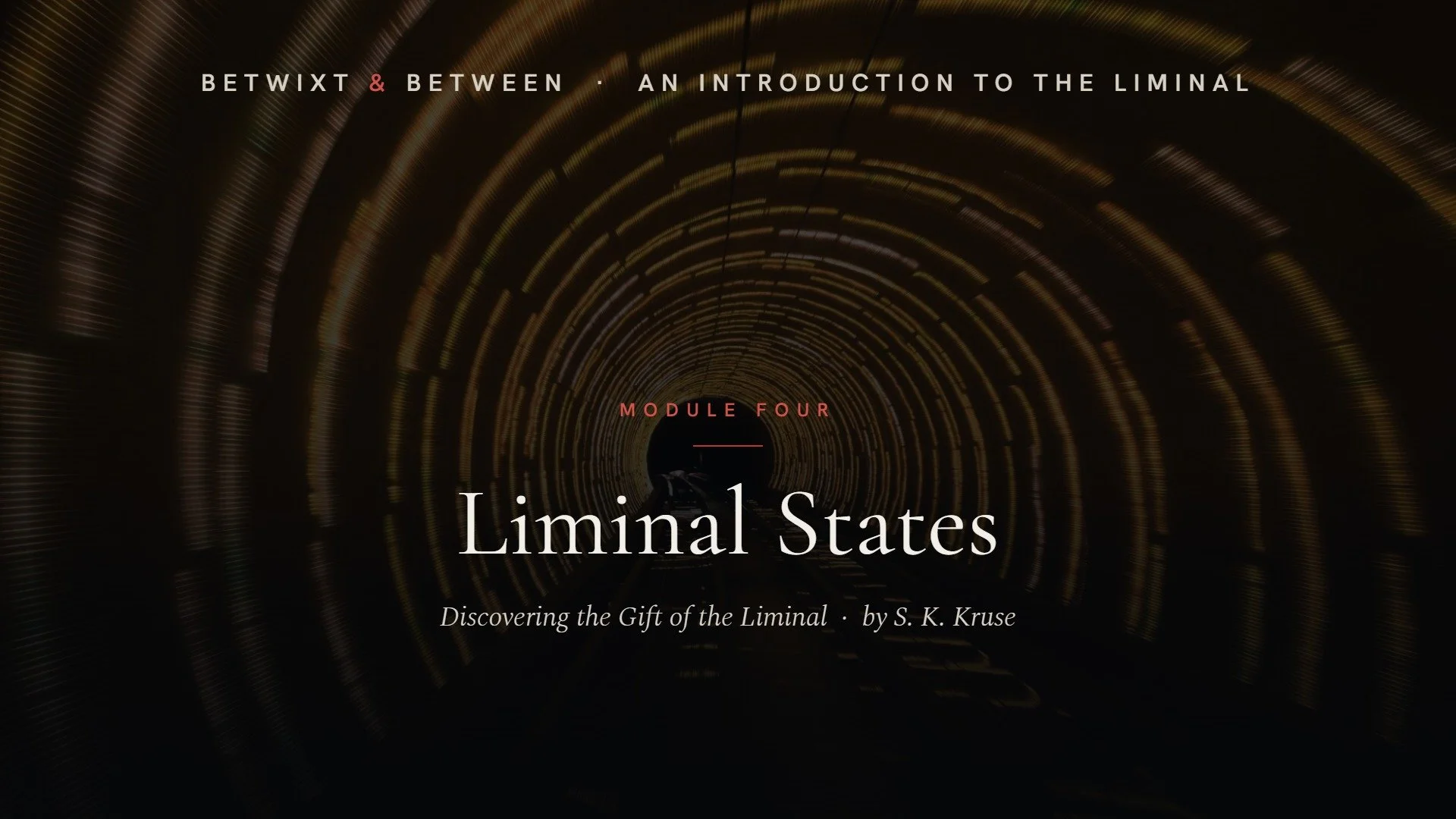
A liminal state is an existential or psychological threshold in which a person is suspended between identities, roles, relationships, beliefs, or ways of understanding the world.
We enter these states when the structures that once located us in life begin to fail.
A relationship ends.
A career disappears.
A diagnosis arrives.
A faith that once seemed indestructible falls silent.
External and Internal Liminal States
Sometimes the threshold is forced upon us by external events. Sometimes it arises inwardly. But the boundary between the external and internal is rarely clean. An outer upheaval nearly always stirs something inward. And sometimes what has been stirring inward eventually cracks open—or blows up—our outer life as well.
These extended thresholds are often referred to as liminal times or seasons. They may last weeks, years, or far longer than seems reasonable.
Their calendar is rarely ours to control.
Why the Liminal Is So Uncomfortable
Human beings like categories.
Categories help us distinguish this from that, beginning from end, insider from outsider, safety from danger.
But the liminal confounds categories.
When you are betwixt and between, many of the coordinates by which you once navigated disappear.
The old identity no longer fits.
The new identity has not arrived.
This can produce all kinds of uncomfortable feelings, like grief, anger, fear, confusion, loneliness, helplessness, and an almost irresistible urge to grab the nearest available certainty and get out.
Anything is better than uncertainty—or so we tell ourselves.
But the quickest exit is not always the best one.
Sometimes we scramble to rebuild a carbon copy of a life that collapsed for a reason.
Sometimes we adopt a new creed before it has earned our confidence.
Sometimes we fill the silence with noise because the silence appears to be asking questions we would rather not answer.
The liminal is uncomfortable because it deprives us of our usual hiding places.

Why Liminal Persons Can Seem Threatening
Liminality does not unsettle only the person passing through it. It can also unsettle the surrounding community.
Societies rely on categories, roles, customs, and recognizable identities to preserve order.
The liminal person does not fit neatly inside them.
Someone who has left one community but not joined another, abandoned one belief without adopting a replacement, or crossed the boundaries by which a culture defines belonging may appear ambiguous—or even dangerous.
In many traditional rites of passage, people in the liminal phase were separated from ordinary society until their transformation was complete. Their status was uncertain. They stood outside the customary structure and were sometimes understood to possess a sacred but dangerous power.
This is one reason outsiders, wanderers, exiles, initiates, mystics, artists, and others who move between worlds have so often inspired both fascination and suspicion.
They remind the settled world that its arrangements are not as permanent as they appear.
The Pain—and Possibility—of the Liminal
This is what drives my fascination with all things liminal:
The liminal carries the possibility of transformation.
Possibility is the important word.
It would be a cheapening of our human experience to claim that every loss is secretly lovely or that suffering automatically makes us wiser.
It does not.
Darkness can damage as well as deepen us.
A threshold can become a place of discovery, but it can also become a waiting room in which we circle the same wound for years.
Transformation becomes possible because what once appeared fixed has loosened. The old arrangement no longer governs every possibility. Something unimagined may now enter.
The seed splits.
The shell breaks.
The familiar world goes dark.
This does not mean darkness is the destination.
It means that certain beginnings can only occur when our old ways of seeing, being, and believing have reached their end.
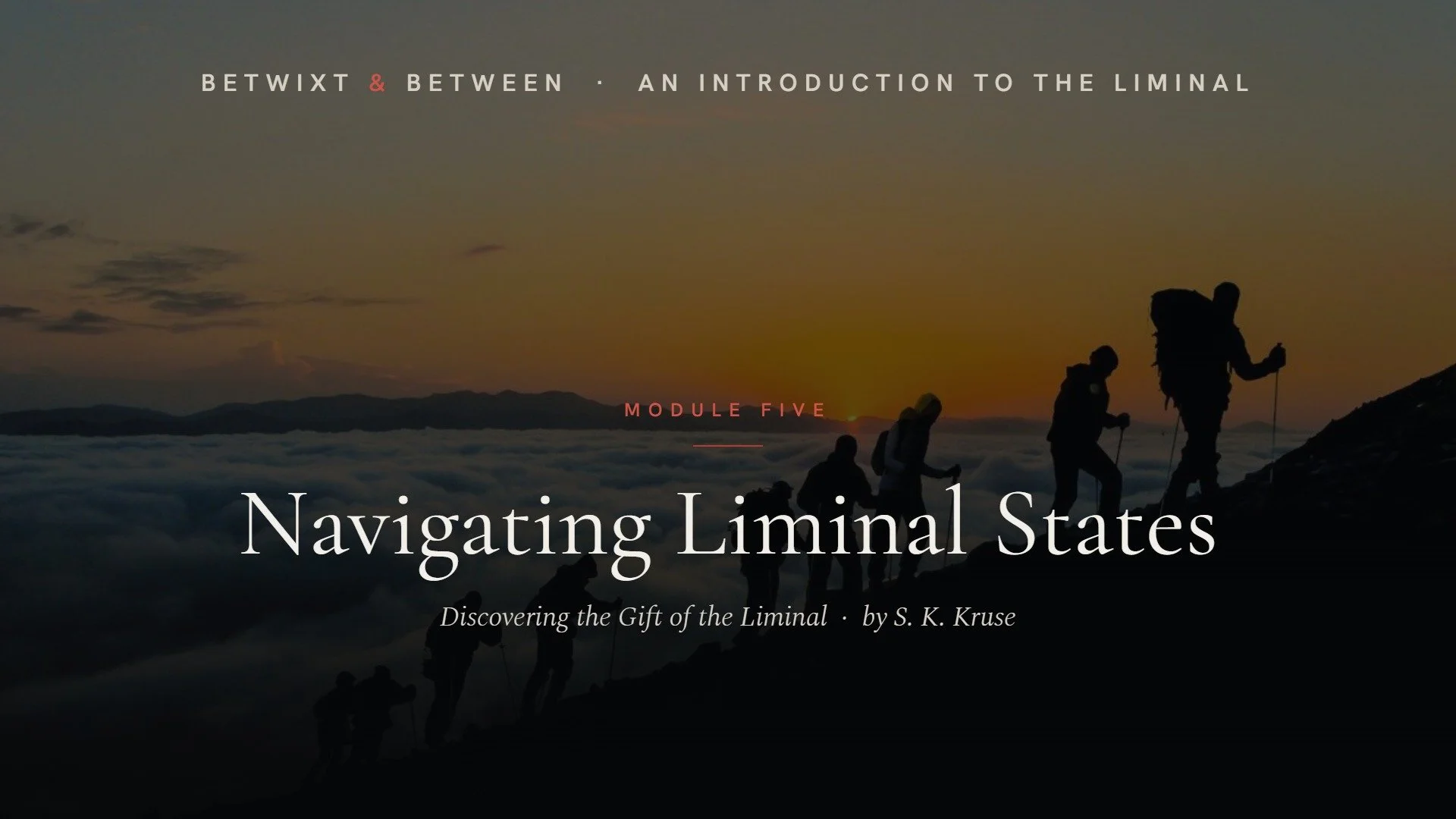
How Do We Navigate
a Liminal State?
Prefer a Visual Journey?
Click through the presentation below. (Or scroll to keep reading.)
The liminal cannot be hurried.
But “do not force it” is not the same as “do nothing.”
Across cultures and generations, people have found practices that help them remain grounded while the familiar world is rearranging itself.
These may include:
ritual
spirituality
movement and bodily awareness
time in nature
pilgrimage
creativity
community
mentors, teachers, and other liminal guides
Ritual gives shape to a transition that might otherwise feel shapeless.
Nature restores a sense of scale.
Creativity gives form to what we are living through before we fully understand it.
Community keeps the threshold from becoming exile.
A guide cannot cross the threshold for us, but someone who has traveled through similar territory may recognize the landscape and help us interpret what we are seeing.
In times of forced liminality, when much lies beyond our control, it may be necessary to begin with very small acts of agency: maintaining one daily rhythm, helping another person, making one honest decision, or simply taking the next possible step.
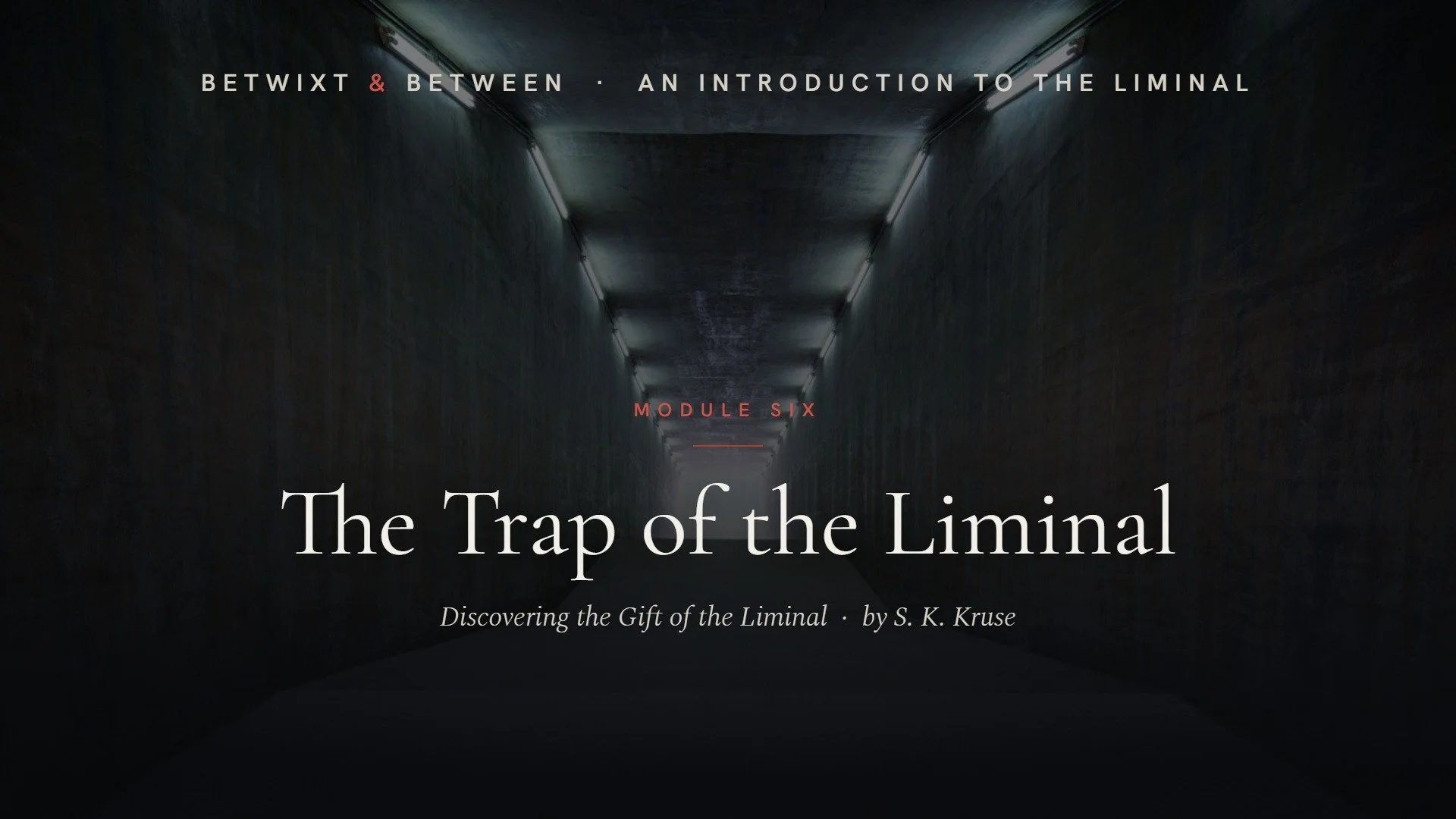
The Trap of the Liminal
Prefer a Visual Journey?
Click through the presentation below. (Or scroll to keep reading.)
The liminal is meant to be a passage.
But passages can become waiting rooms.
Holding cells.
Prisons.
The same threshold that loosens old identities and opens new possibilities can also become a place of suspension, stagnation, and repetition.
We may resist the crossing because the familiar past—even when painful—feels safer than an uncertain future.
We may polish the past into something more golden than it ever was.
We may wait for an apology that will never arrive.
We may postpone movement until a perfect moment that has no intention of presenting itself.
We may become so identified with a wound that healing begins to feel like self-betrayal.
This resistance is understandable.
Liminal states ask a great deal of us:
Honesty.
Relinquishment.
Decision.
Acceptance.
Change.
Risk.
All the hardest things in life.
But recognition is the first step toward the door.
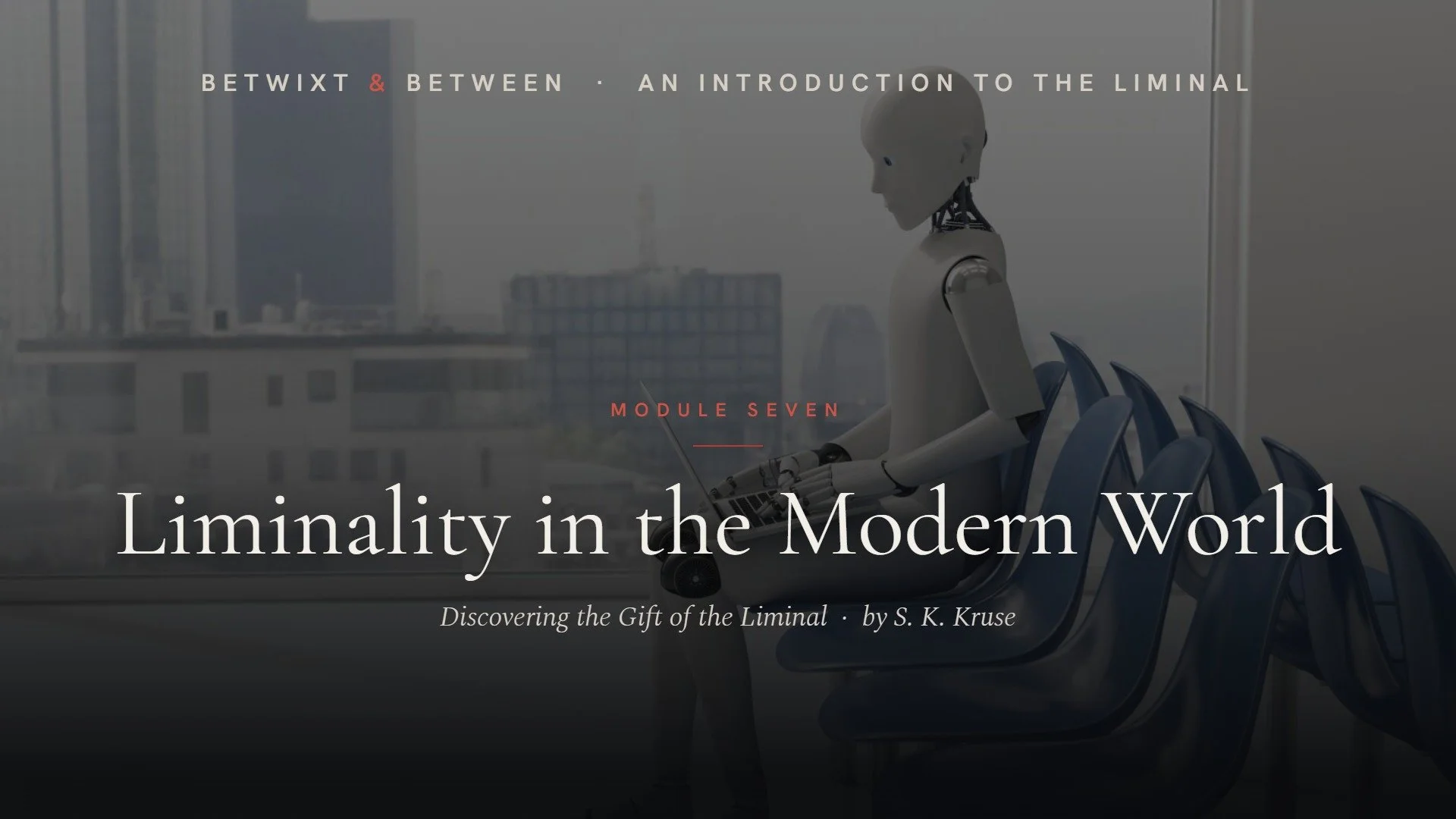
Liminality in the
Modern World
Prefer a Visual Journey?
Click through the presentation below. (Or scroll to keep reading.)
Liminality is not only a private matter.
We live in an age of rapid change and rising complexity—a time in which entire societies seem suspended between worlds.
Automation and artificial intelligence are altering work before new roles and expectations have fully formed.
Digital technologies blur the boundary between our online and offline selves.
Environmental instability places communities between the climate they once understood and the uncertain world for which they must now prepare.
Political polarization weakens shared narratives without providing a new source of common meaning.
The gig economy leaves many people neither securely employed nor fully independent.
The COVID-19 pandemic suspended familiar routines across the world, placing billions of people inside a shared but profoundly unequal threshold.
These forces can produce a widespread sense that the ordinary world is dissolving faster than a new one can be built.
In such an age, grounding practices matter all the more—not because they offer packaged answers, but because they help us remain human and in touch with the things that fill our souls.
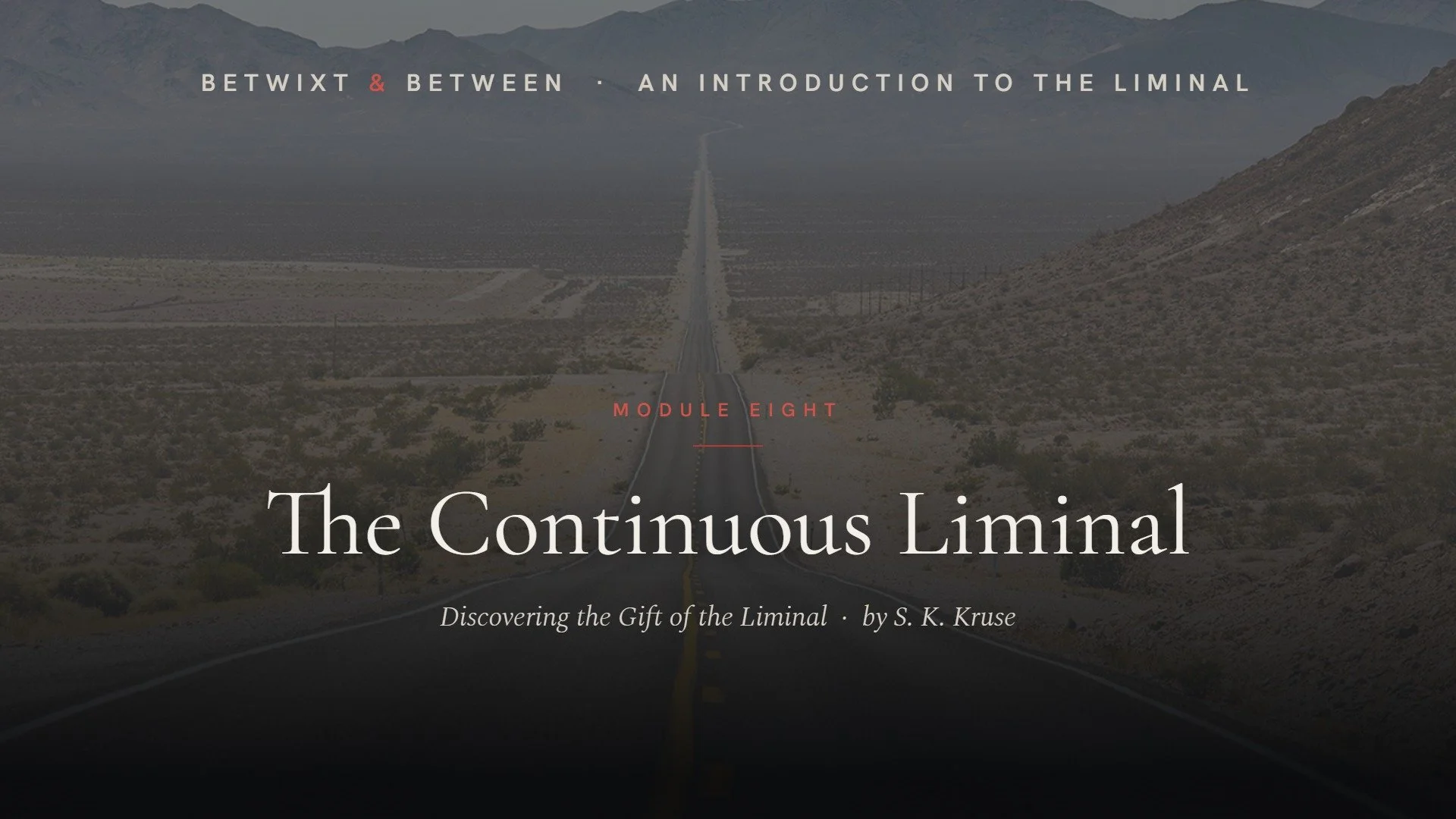
The Continuous Liminal
Prefer a Visual Journey?
Click through the presentation below. (Or scroll to keep reading.)
We all pass through specific, significant liminal seasons.
But there is also a deeper sense in which life itself is continuously liminal.
Everything changes.
The body.
Relationships.
Communities.
Beliefs.
The person reading this sentence is not quite the same person who began the page.
Heraclitus, the ancient Greek philosopher, said, “No man ever steps in the same river twice, for it's not the same river and he's not the same man."
Upon inspection, the only constant in life is change.
Life is perhaps less like a straight path and more like a spiral.
We return to the in-between again and again, each passage carrying echoes of the ones before it while leading somewhere we have never been.
To recognize this is not to declare that nothing matters because nothing lasts.
It is to loosen our grip on the illusion of permanence.
The gift of the continuous liminal is not endless uncertainty.
It is the possibility of becoming more adaptable, more attentive, and perhaps less astonished when life insists on changing—again.
The Liminal in Spirituality, Literature, and Art
Thresholds are everywhere in religion and story:
Wilderness.
Pilgrimage.
Exile.
Initiation.
Descent.
Death and rebirth.
The hero leaves the ordinary world. The pilgrim departs home. The prophet enters the desert. The artist crosses from the known into the unknown and returns carrying something that did not exist before.
These stories tap into our deepest human experiences.
And they have liminality written all over them.
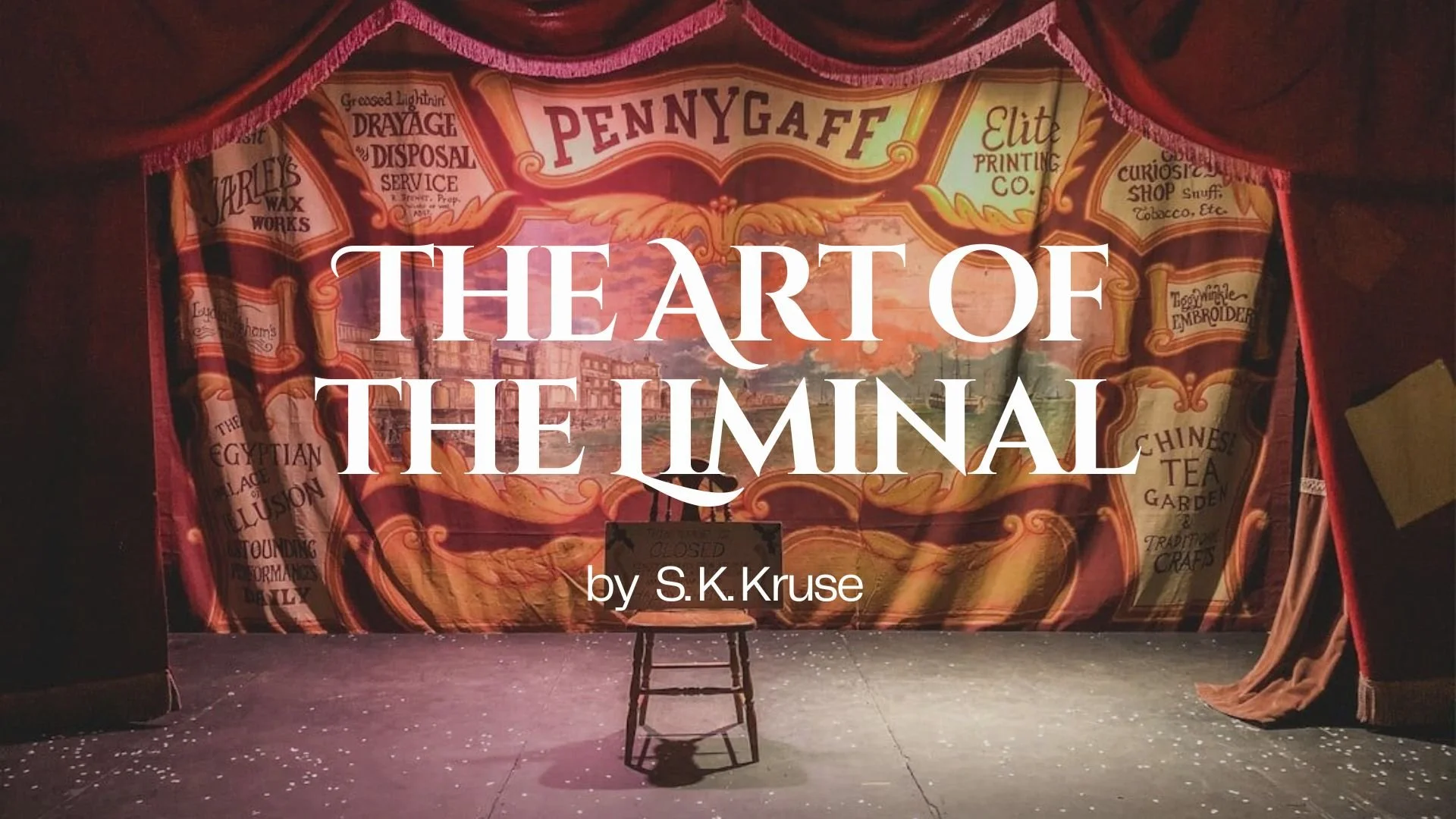
The Art of the Liminal
The liminal is not only something we endure.
It is also a territory artists enter.
In fact, in this 13- minute video, I make the case that you cannot create Art without entering the borderlands of your psyche.
Continue Your Journey Through the Liminal
With S. K. Kruse
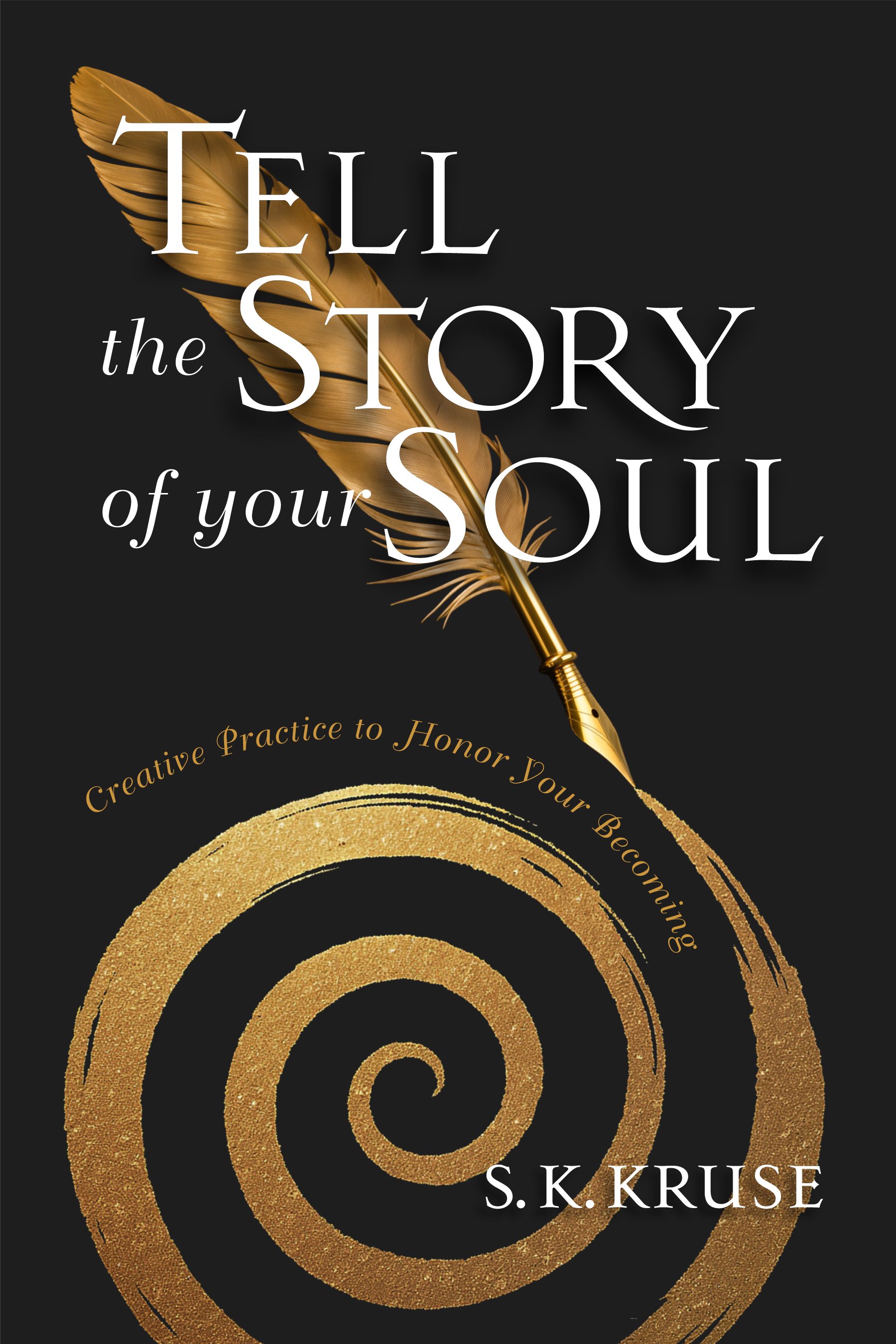
Tell the Story of Your Soul
A guided practice for tracing the liminal passages of your life and creating a “soul story” in whatever medium feels true to you.
No artistic experience is needed—only a willingness to look inward, honor what you have lived, and let your soul speak.
Available as a self-paced online course and a print journal, with a companion facilitator guide for group leaders.
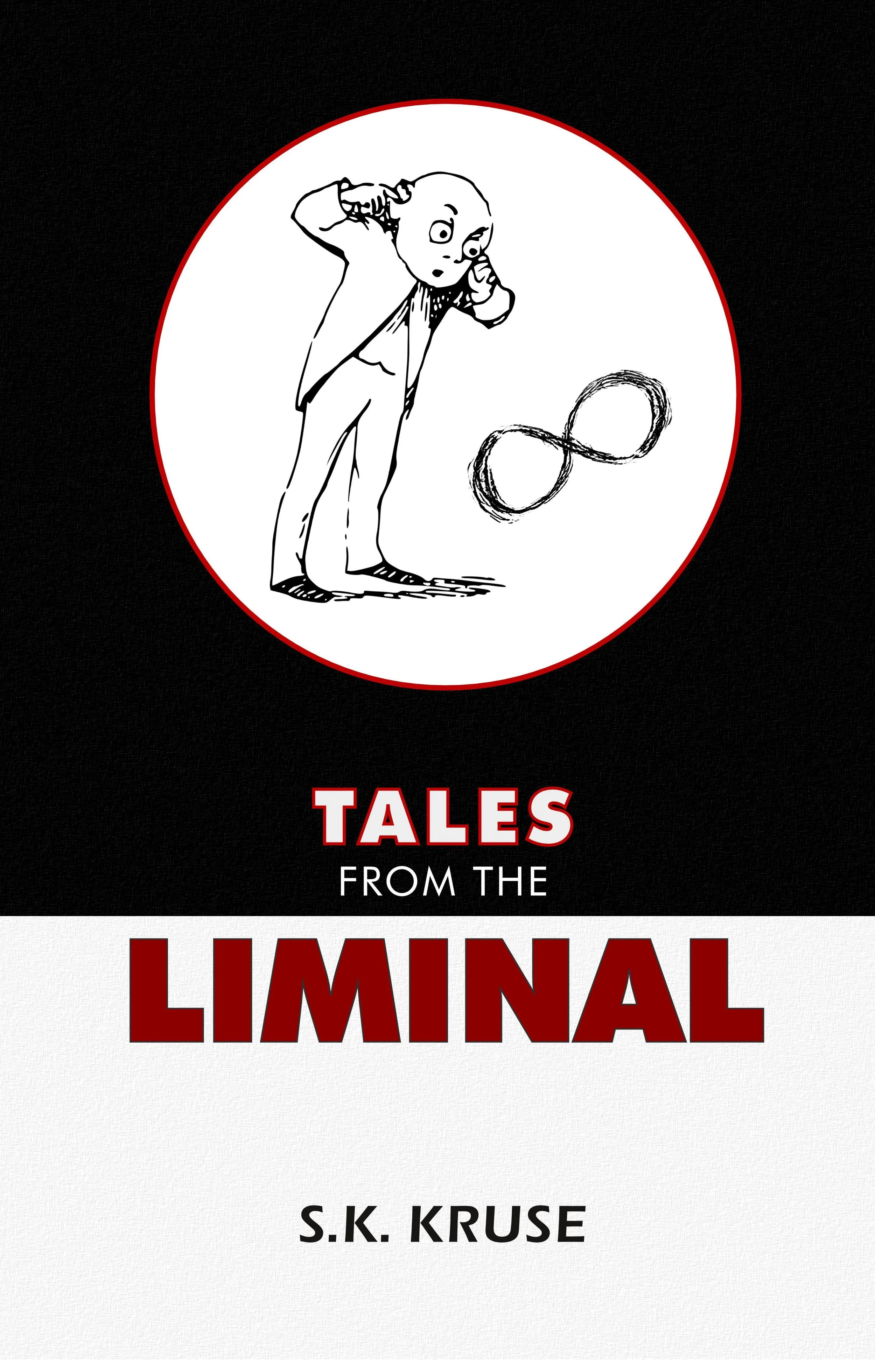
Tales From the Liminal
In this collection of fifteen curious and delightful short stories, you never know who you’re going to meet or where you’re going to end up. You can be certain, however, that you’ll always find yourself smack dab in the middle of some befuddling predicament of existence.
Using humor and horror, satire and allegory, fabulism and realism, Tales From the Liminal takes you for an extraordinary ride, submerging you in spaces where anything is possible, especially transformation.
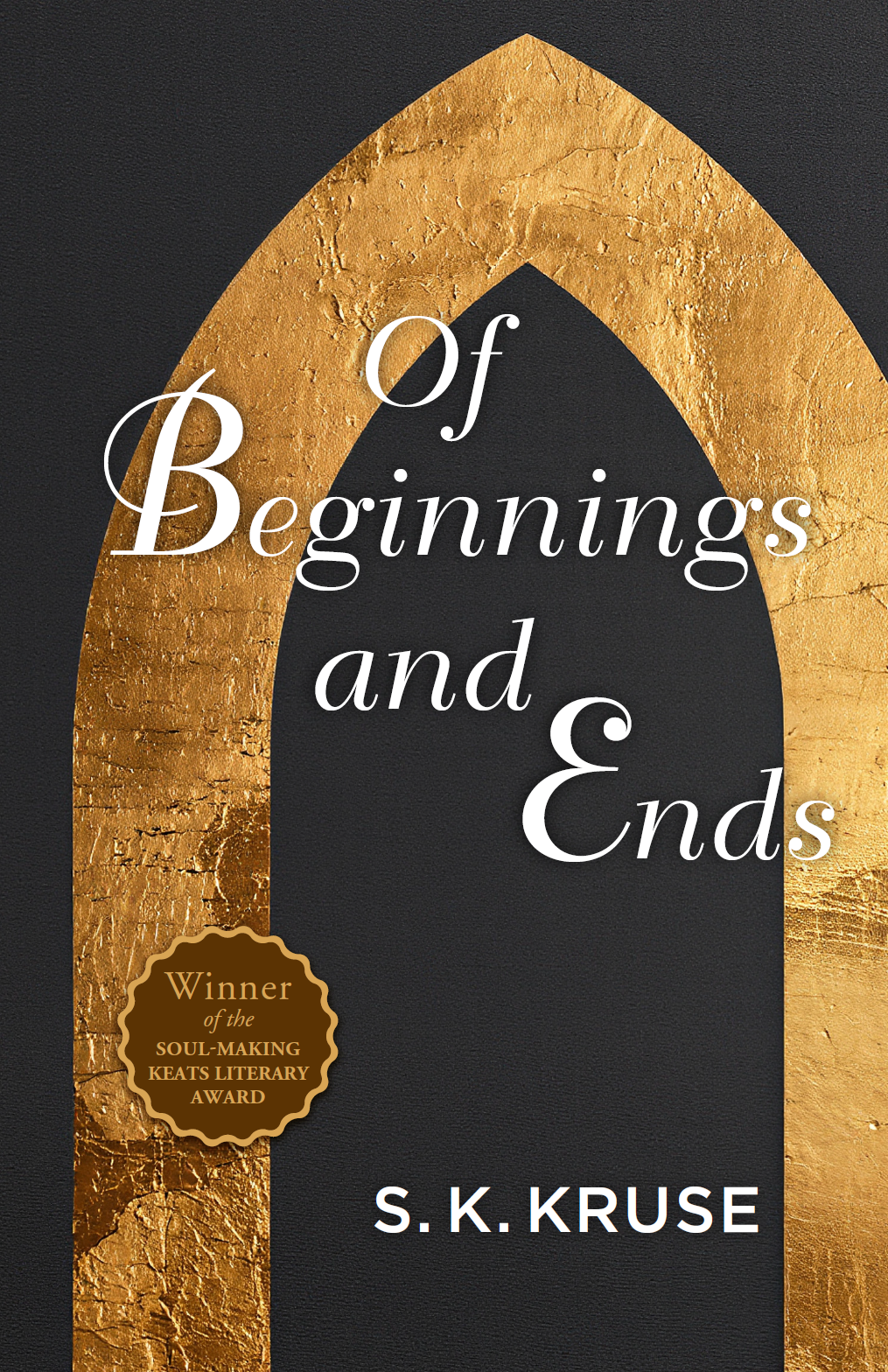
Of Beginnings and Ends
In every ending waits a new beginning.
Witty, numinous, and deeply human, Of Beginnings and Ends is a reckoning with the liminal passages of existence, and an ode to the courage it takes to embrace every ending as the threshold of a new beginning.

Invite S. K. Kruse
S. K. Kruse is available for presentations, workshops, retreats, classroom visits, and discussions exploring liminality, creativity, storytelling, and the life of the soul.
Available presentations and workshops include:
Betwixt & Between: Discovering the Gift of the Liminal
The Art of the Liminal
Tell the Story of Your Soul
Tales From the Liminal
Of Beginnings and Ends
Frequently Asked Questions About Liminality
What is a liminal space?
A liminal space is a transitional place that belongs fully to neither where you have come from nor where you are going. Examples include airports, hallways, staircases, waiting rooms, bridges, borders, and doorways. The term is also used more broadly for inner states and periods of life that feel similarly in between.
What does “liminal” mean?
Liminal means relating to a threshold or transitional stage. It comes from the Latin word limen, meaning threshold. A liminal experience occurs after one condition has ended but before the next has fully begun.
What does “betwixt and between” mean?
“Betwixt and between” means neither one thing nor another. Victor Turner used the old English expression to describe people in the liminal phase of a rite of passage: no longer holding their former status but not yet incorporated into a new one.
Is liminal the same as transitional?
The words overlap, but they are not identical. Transitional describes change or movement generally. Liminal emphasizes the ambiguous threshold itself—the charged middle after the old has ended and before the new has taken form.
What is a liminal state?
A liminal state is an existential, psychological, social, or spiritual condition in which a person is suspended between identities, roles, beliefs, communities, or ways of life.
What is a liminal season of life?
A liminal season is an extended period during which an old identity or way of life has ended but a new one has not yet formed. Divorce, bereavement, illness, retirement, spiritual questioning, adolescence, and major career changes can all create liminal seasons.
Can a person get stuck in a liminal state?
Yes. A threshold can become prolonged when fear, avoidance, nostalgia, unresolved grief, surrendered agency, or attachment to an old identity prevents movement. Recognizing that a passage has become a trap is often the first step toward change.
Is liminality always transformative?
No. Liminality creates the possibility of transformation, but it does not guarantee it. Darkness can damage as well as deepen us. Circumstances, choices, support, opportunity, and the possibility of eventually reintegrating into a new way of life all shape what emerges from a liminal period.
Is liminality spiritual?
Liminality is not inherently religious, but threshold experiences often carry spiritual significance. Religious traditions have long marked passages through initiation, pilgrimage, vigil, wilderness, fasting, death-and-rebirth imagery, and rites of passage.
Why do liminal spaces feel eerie?
Liminal spaces often retain the appearance of familiar places while lacking the people, activity, or purpose we expect to find there. That mismatch—familiar yet strangely wrong—can create an uncanny feeling.
A Short Glossary of Liminal Terms
Antistructure
Victor Turner’s term for the temporary loosening or reversal of ordinary hierarchies, roles, and social rules during certain liminal experiences.
Arnold van Gennep
The French ethnographer whose 1909 work The Rites of Passage described the three-part pattern of separation, transition, and reintegration.
Communitas
Victor Turner’s term for the deep sense of equality, immediacy, and fellowship that can arise among people passing through a liminal experience together.
Limen
The Latin word for threshold, from which the modern term liminal is derived.
Liminality
The ambiguous threshold between established conditions, identities, statuses, times, or spaces.
Rite of Passage
A ritual or ceremonial process marking a significant transition from one social condition or stage of life into another.
Victor Turner
The twentieth-century anthropologist who expanded van Gennep’s work and developed influential ideas about liminality, “betwixt and between,” communitas, and antistructure.
Sources and Further Reading
Bridges, William. Transitions: Making Sense of Life’s Changes.
Douglas, Mary. Purity and Danger.
Thomassen, Bjørn. Liminality and the Modern: Living Through the In-Between.
Turner, Victor. The Ritual Process: Structure and Anti-Structure.
van Gennep, Arnold. The Rites of Passage.
Read the full bibliography and history of liminality (Coming Soon.)
Libations From the Liminal
Come linger in the borderlands, where philosophy, spirituality, literature, and the arts are poured out as offerings to the mysteries of existence.
Subscribe for essays, stories, poems, reflections, and occasional dispatches from the threshold.
The Liminal Hub
-
![Playground at night with empty swingsett]()
What is the Liminal?
The threshold itself: the times, spaces, and states of being that leave us betwixt and between. (You are here.)
-
![Yellow leaves on trees]()
Liminal Times
Dawn, dusk, midnight, festivals, seasons, and the biological thresholds that keep the time of a human life.
-
![abandoned shopping mall with broken escalator]()
Liminal Spaces
The in-between places where ordinary purpose is suspended and the familiar can become uncanny.
-
![inside of a highway tunnel]()
Liminal States
The inner thresholds that suspend us between identities, roles, beliefs, and ways of knowing.
-
![people hiking up a mountain at dawn]()
Navigating Liminal States
Ritual, nature, creativity, community, pilgrimage, and guides that help carry us through uncertain terrain.
-
![a long dark hallway]()
The Trap of the Liminal
How fear, nostalgia, avoidance, surrendered power, and wounded identity can turn a passage into a permanent address.
-
![android working at a computer]()
Liminality in the Modern World
How technology, work, environmental disruption, cultural division, and collective upheaval leave societies between worlds.
-
![long highway going through the desert]()
The Continuous Liminal
Life as recurring passage: a spiral of endings, thresholds, and beginnings in a world where the only constant is change.
Go deeper
The Art of the Liminal — the Guild talk on liminality and the creative act, with audio.
Books & Offerings — the books, courses, and the Facilitator Kit, all in one place.