A Soul-Making Keats Award-Winning NoveL
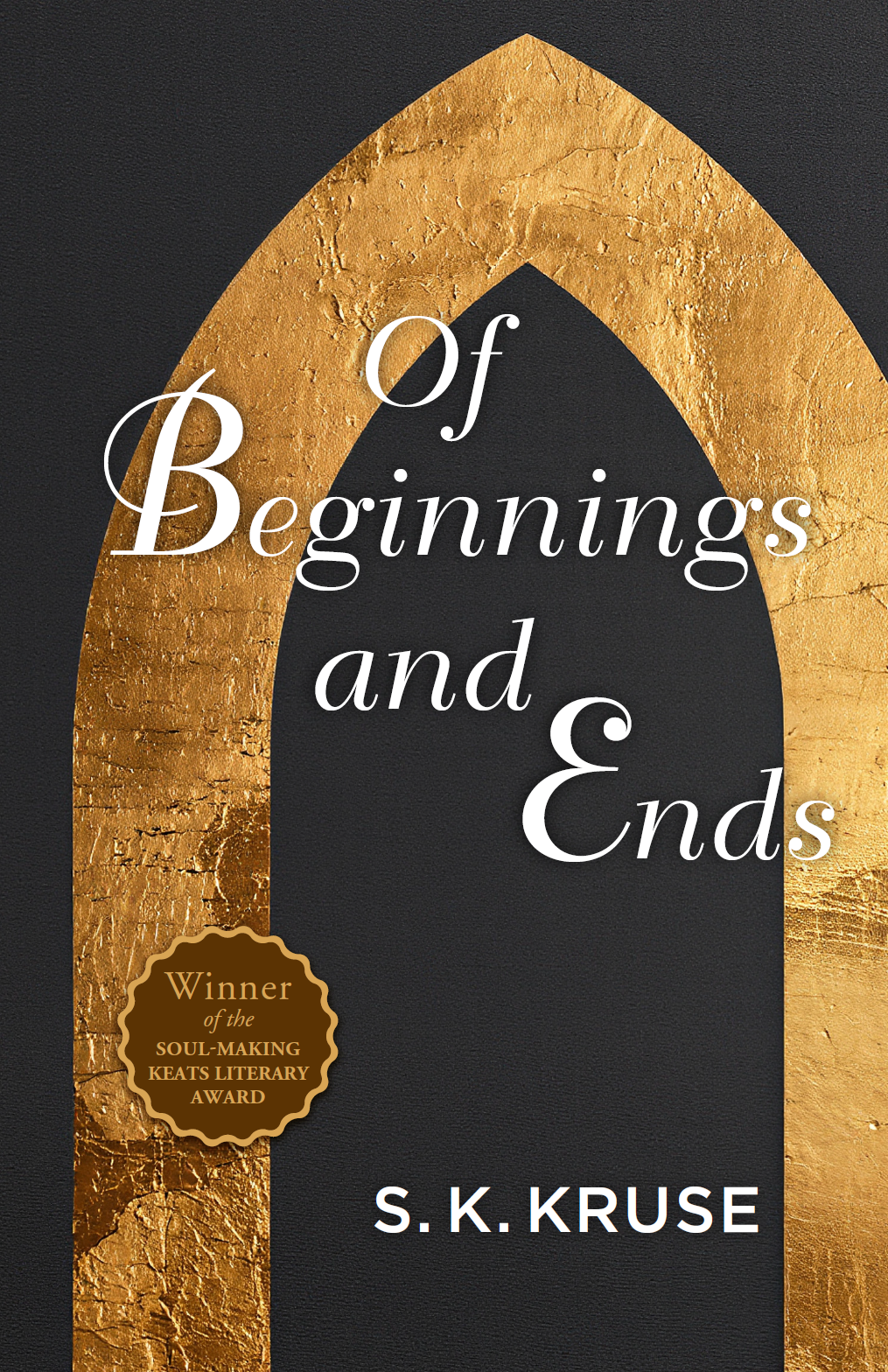
In every ending waits a new beginning.
Evy has always been able to feel the sorrow hiding in others. One day, she reaches out to a stranger drowning in his grief and is whisked away to the vast and luminous Hall of Beginnings and Ends.
The hall demands a choice. Evy must pass through a mist-shrouded arch to her best path forward or through a side door offering her a detour. Either way, pain awaits—the crucible of transformation or the slow decay of refusing to change.
Across the years, Evy returns to the hall without warning, always met with the same demand. Choose. Each time, she is plunged into strange realms uncomfortably familiar, where her hopes and fears, beliefs and doubts take shape as uncanny landscapes and characters who seem to know her better than she knows herself.
Witty, numinous, and deeply human, Of Beginnings and Ends is a reckoning with the painful crossroads of existence, and an ode to the courage it takes to embrace every ending as the threshold of a new beginning.
"S. K. Kruse's thought-provoking and humorous portrait of Everywoman Evy and her soul-searching quest is a riveting philosophical, spiritual, and psychological saga that not many writers could have produced."
— Diane Donovan, Midwest Book Review

“Soul stories” run deep in our human history. Augustine's Confessions. Bunyan's Pilgrim's Progress. Gilbert's Eat, Pray, Love. Across centuries and cultures, people have felt the pull to look inward, gather what they find, and give their soul’s journey some kind of shape.
Because I like words, I made up one for this unique genre. I call these soul stories “telographies”—a mashup of the Greek words telos (end or fulfillment) and graphia (writing).
What I love about the idea of a telos — your deepest purpose, or that for which you exist — is that you don't have to have any particular philosophical or theological framework to see that everything that exists has its own inherent purpose, simply by existing in the particular way it exists.
We all make this inner journey, whatever our worldview, whatever our choices. We all grow and change, get stuck and lose our way, then hopefully find the thread again, moving forward through lessons hard learned.
A telography is simply a story of one’s becoming.
And you’re the only one who can tell yours.
What is the story of a soul?
Telographies that are spiritual autobiographies & Biographies of real people’s lives
-
c. 397–400 CE; Christian, late antiquity. Augustine narrates his early life and conversion, reflecting on key themes like desire, memory, time, and God’s action in a human life.
-
1814; Jewish / Hasidic. Hagiographic rather than self-written, but it operates as a telography, built from encounters, wonders, devotion, and a focus on inner purity.
-
c. 1106; Islam. A brilliant account of the soul’s movement through certainty, doubt, and Sufi-inflected insight as a rescue from illusion.
-
1966; Tibetan Buddhist. Part life story and part lineage-and-training narrative, where identity is forged through practice, vows, and disciplined spiritual formation.
-
c. 1488; Tibetan Buddhist. A dramatic transformation arc — harm to remorse to discipline to awakening — told as an exemplar story meant to form the reader as much as inform them.
-
1562–1565; Catholic Christian. A candid interior account of prayer, doubt, mystical experience, and discernment.
-
1946; Hindu / Kriya Yoga. A spiritual-quest narrative organized around teachers and realizations, with the metaphysics of awakening as the story’s underlying scaffolding.
-
1898; Catholic Christian. A memoir presenting her “Little Way” through concrete episodes of ordinary life, prayer, and spiritual struggle.
-
1932; Lakota/Indigenous spirituality, as told to John G. Neihardt. Vision-centered and shaped by sacred history, reading more like “calling and cosmology” than conventional autobiography.
-
1948; Catholic Christian. A modern conversion memoir about longing and restlessness, and the slow reorientation of the self toward a different center of gravity.
-
1955 (English; original German 1908); Jewish / Hasidic, the Baal-Shem interpreted through Buber’s I-Thou philosophy. Founding legends of Hasidism as a sustained soul-narrative.
Telographies that are allegorical, fictionalized, or semi-autobiographical accounts of the inner life
-
c. 1177; A classic Sufi allegory: a collective pilgrimage that becomes a staged path of ego-loss and awakening.
-
c. 1308–1321; Catholic Christian, medieval. The archetypal Western soul-journey: descent into hell, ascent through purgatory, and arrival at the beatific vision.
-
1678–1684; Protestant Christian. An allegory in which the protagonist, Christian, travels from the “City of Destruction” to the “Celestial City,” meeting personified forces like fear, doubt, temptation, and spiritual support along the way.
-
1884; An Eastern Orthodox devotional journey. (Attributed to Archimandrite Michael Kozlov.) A wandering narrator practices the Jesus Prayer “without ceasing,” serving as a practical, experiential guide to interior prayer.
-
1922; A philosophical spiritual quest. A fictional seeker's life becomes a sequence of experiments aimed at self-knowledge and a changed relationship to suffering and desire.
-
1927; Darker and more existential than Siddhartha, but still a "seekers' book" about crisis, fragmentation of self, and a push toward integration.
-
943; A philosophical fable. A deceptively simple travel/encounter story examining love, responsibility, loss, and what a meaningful life pays attention to.
-
1974; A philosophical "values quest." Built around a real cross-country motorcycle trip, shaped with novelistic craft into a meditation on meaning and quality.
-
1970; A compact allegorical fable about discipline, transcendence, and self-realization.
-
1988; A modern spiritual allegory. A symbolic journey narrative where the outer plot is really a map of inner formation — fear, calling, trust, surrender, and perseverance.
-
2026; A literary novel of interior pilgrimage in which the protagonist, Evelyn, arrives in the Hall of Beginnings and Ends at critical junctures of her life and must choose between the crucible of transformation or the slow decay of refusing to change.
Tell the story of your soul
Words optional
More From S. K. Kruse
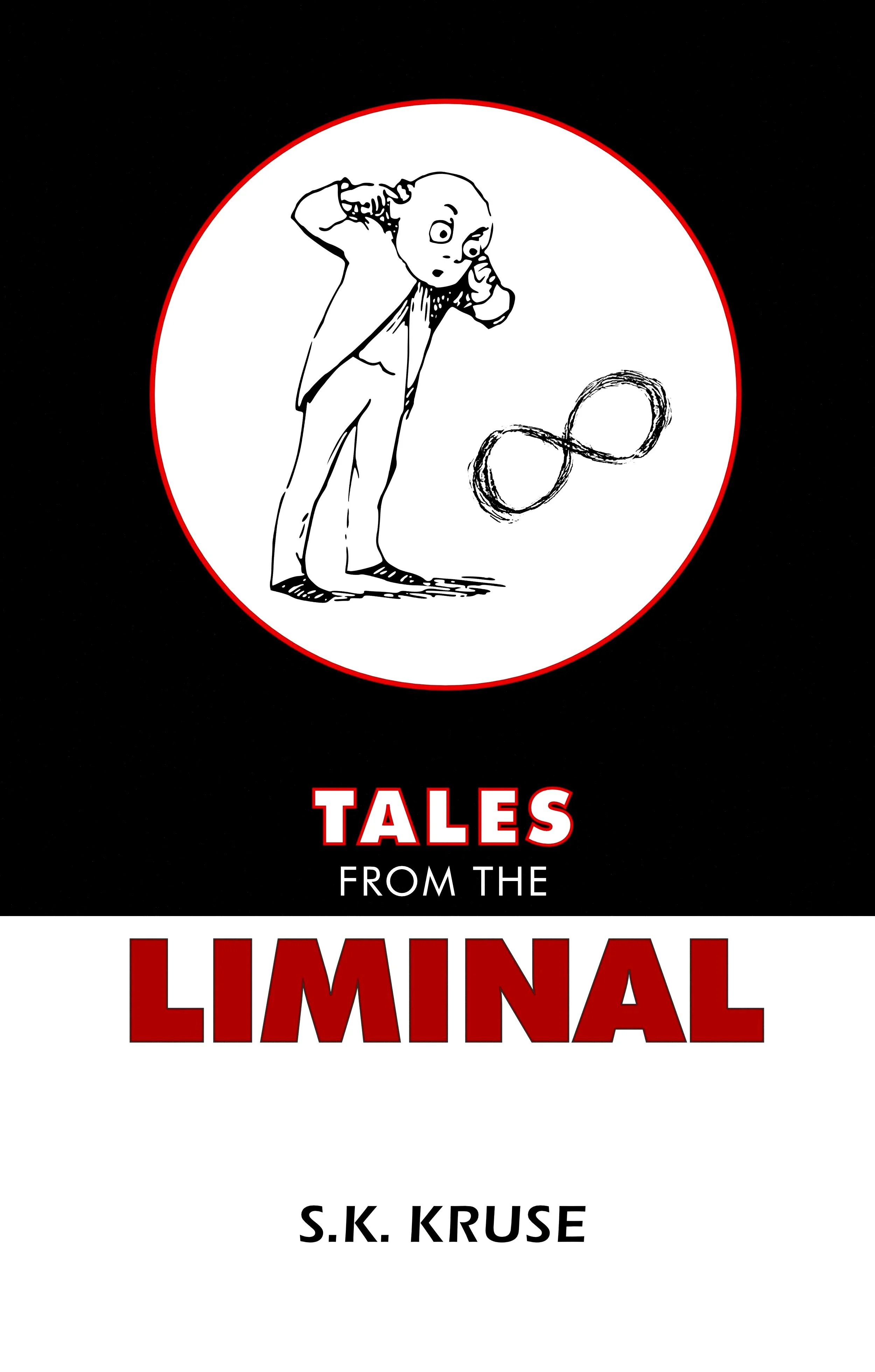
Tales From the Liminal
A collection of fifteen curious and delightful short stories.

Libations From the Liminal
Come linger in the borderlands, where we pour out philosophy, spirituality, and the arts as offerings to the mysteries of existence.
Betwixt & Between
A free presentation, with everything you need to host a discussion or teach a unit on the liminal.