
The 5th annual
liminal essay contest
Coming January 1, 2027
Mark your calendars—the 5th Annual Liminal Essay Contest will open in January!
5th Annual Liminal Essay Contest
Submissions open January 1, 2027, and close March 1, 2027
College Awards
$100 1st Place
$50 2nd Place
$25 3rd Place
HIGH SCHOOL AWARDS
$100 1st Place
$50 2nd Place
$25 3rd Place
The Liminal Essay Contest criteria
For spring semester 2027, high school contestants must be enrolled in high school (or homeschool), and college contestants must be enrolled in an undergraduate program at an accredited college or university. Contest winners must send proof of enrollment prior to receiving funds.
Contestants shall submit an essay of 700-1,000 words on an aspect or aspects of liminality in “I Followed Schrödinger’s Cat and Here’s What I Found” from S. K. Kruse’s short story collection, Tales From the Liminal. Download a free copy of the story here. (No purchase required.)
Contestants must fill out and submit the online form and essay by 11:59 pm CST, March 1, 2027. Submission form can be found below.
The decisions of the judges are final and binding.
Past first-place winners, as well as friends, students, and relatives of the judges, are ineligible to apply.
AI USE POLICY: This is a contest for human ideas, in human words. You may use AI tools for a final copyedit — to catch a typo or tighten a sentence or two — and for nothing more. The thinking, the argument, and the phrasing must be your own. We expect (and want!) to hear YOUR IDEAS in YOUR VOICE. Thank you in advance for your integrity in this matter.
BE SURE TO:
Remove ALL identifying information from the essay document.
Include ONLY YOUR INITIALS with the essay title and page number in the header of each page.
MATCH the essay title in the form field to the essay title in the document and filename.
Use standard MLA formatting.
Select the correct entry level in the submission form: High School or College.
High school and college essays will be judged in separate competitions. In March of 2027, contest winners will be notified, and their names announced on skkruse.com and social media, as well as shared with the winners’ schools and relevant media outlets. A picture and short bio of the winners will be requested at that time. In addition, S. K. Kruse will schedule a live virtual author visit with the winning classes, offering students the opportunity to discuss the contest, writing, and the power of the liminal in literature and life.
DOWNLOAD A FREE COPY OF THE STORY HERE!
〰️
DOWNLOAD A FREE COPY OF THE STORY HERE! 〰️
Liminal Essay
Submission Form
Submission period for the 5th Annual Liminal Essay Contest opens January 1, 2027 and closes March 1, 2027.
So, what is THE LIMINAL?
THE LIMINAL is a time, space, or state of being that’s betwixt and between. Neither here nor there. If it’s a time, it might be a summer of travel, a year of illness, or a period of war. If it’s a space, it might be a staircase, airport, or refugee camp. If it’s a state of being, it might be the experience of not fitting into the world’s tidy categories and feeling like you exist somewhere between them. Or it might be the experience of no longer fitting into your own tidy categories but feeling unable to find your way out of them yet. If this is the case, you didn’t end up there by accident. Something new is emerging in you, and for that to happen, some old things need to fall away. Darkness, confusion, and disorientation are to be expected. Just make sure you let the liminal do its work in you. You’ll be glad you did.
RESOURCES to teach the Liminal
Betwixt & Between: Discovering the Gift of the Liminal
Whether you’re a teacher looking for classroom-ready resources or simply curious about the liminal, feel free to download my Betwixt & Between Presentation and Resource Packet. Find out more.
Meet THE Judges!

Siobhán Scarlett O'Reilly is a writer, researcher and filmmaker. She is completing a PhD at the University of Brighton on the emotional impact of liminal space imagery in digital culture, and has presented her research at sixteen international conferences. Her poetry chapbook Eat All My Letters was published by Dancing Girl Press in 2026, and her poems are held in the National Poetry Library. Her films have screened at festivals in the UK, Europe, India and the United States. She writes about girlhood, illness, surveillance and being disbelieved.
High School Judge
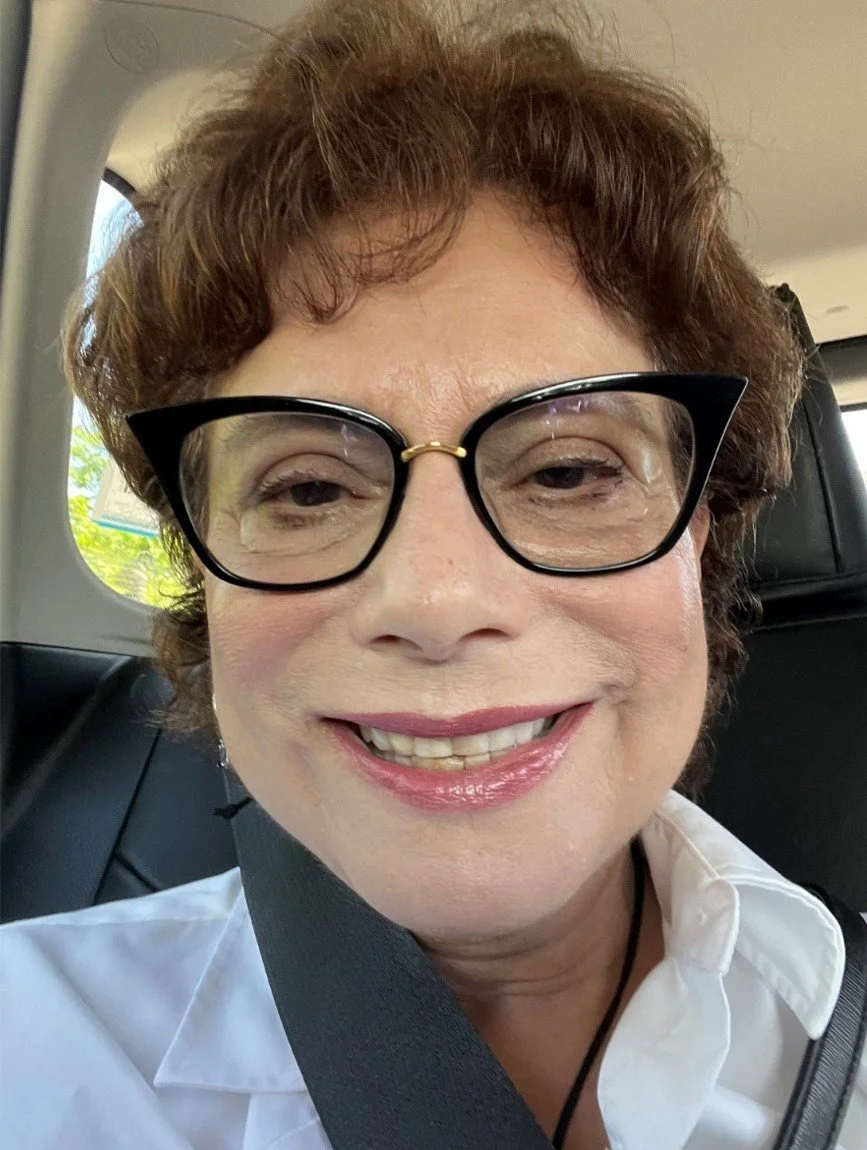
Nancy Bandiera holds a PhD in Communication Studies, an MFA in Theatre, and an MA in Interdisciplinary Studies focused on Applied Linguistics and Education. She teaches Communication Studies at LaGuardia Community College, City University of New York. A Veriditas-certified labyrinth facilitator, she has guided students in labyrinth walking for many years. Her writing draws on walkers’ interviews and reflections to explore liminality, the space between conscious awareness and unconscious intuition, and its potential to deepen self-awareness and personal growth.
College Judge
Essay Contest Winners Discuss Liminality
Congratulations to
the Winners of the
4th Annual Liminal Essay Contest!
COLLEGE AWARDS
1st Place: “The Work of the Liminal” by Emily Brown, Thomas More University sophomore
2nd Place: “The Dream of an Eternal Story” by Cooper Stokes, University of Missouri sophomore
3rd Place: “Losing Good Fortune” by Sydney Van De Hei, University of Missouri junior
HIGH SCHOOL AWARDS
1st Place: “On Liminality in Goodbye, Bonavento: A Doorway or a Cage?” by Sophia Tzvetanov, Thomas Jefferson High School for Science and Technology senior
2nd Place: “The Crucible of Change: Liminality as a Catalyst for Transformation in Goodbye, Bonavento” by Morgan Shoken, Williamsburg High School for Architecture and Design junior
3rd Place: “Liminality: a Rising Tide” by Saanvi Reddy, Franklin High School sophomore
Click the links to read the winning essays.
Judge Timothy Carson said this of the high school entries:
“By engaging with this powerful story these young writers toured the haunted halls of liminality which are never simple, easy or even solvable. So very often liminality is a condition as much as a passage. And that, as so much literature of the ages testifies, holds equal measures of tragedy and hope. In one way or another all of these writers walked the line between those magnetized poles.”
Judge Mary Potter said this of the college entries:
#1 “The Work of the Liminal” analyzes the challenging transformational work of liminality through the narrative arc of the story’s protagonist, giving the reader both a clear grasp of the story and a clear view of what liminal experience is, how it works, and, sometimes, fails to work in particular circumstances. “The story is not only about poverty under occupation or the loss of a beloved monkey; it is about inhabiting the unstable space where identity is made and unmade. Kruse renders liminality not as backdrop but as crucible.” Sketching out the intersecting dimensions of that crucible of “in-betweenness” in the story leads the author to conclude that the story “portrays liminality as a dynamic threshold where identity is destabilized and reconstituted under pressure. Through spatial crossing, linguistic mediation, symbolic loss, and decisive performance, Angela moves from paralysis to decisive action.” The clarity of the prose, the precision of the analysis of liminality, and the apt use of selected details from the story all come together to make this an essay that honors the story as story while exploring the concept of liminality.
#2 “The Dream of an Eternal Story” approaches the liminal in this story as a specific kind of change within our ever-changing lives and interprets that experience primarily in terms of loss and “disenfranchising grief.” I found the author’s emphasis on the need for a guide during such threshold experiences (the protagonist’s father who serves as her companion along the way) compelling: “It is through the comfort of others that we learn to live with the shift that our life has undergone, and thus emerge from The Liminal Loop as a character emerges at the end of a story: changed.”
#3 “Losing Good Fortune” highlights a broad view of liminality and how it shows up in the story in “liminal states within liminal experiences within liminal periods,” a comprehensive view often missed when discussing liminality. I also appreciated how the author calls attention to two details that are often overlooked when analyzing liminality: the physical triggers or catalysts for liminal experiences, for example, the tin cup the protagonist uses and her dancing."
Sponsored by S. K. Kruse and the Guild for Engaged Liminality

We were so pleased to have the Liminal Essay Contest selected for inclusion in the Minnesota Academic League’s 2025-2026 Reach for the Stars Programs and Activities Catalogue!