This week’s libation is poured out on the threshold of your local polling place

November 3rd
We’ve got a big day coming up Tuesday. I’m trying not to stress about all the shenanigans that will most likely ensue, but it’s hard when every five seconds you’re getting another text from some political group, and every news piece in your feed is about the election.
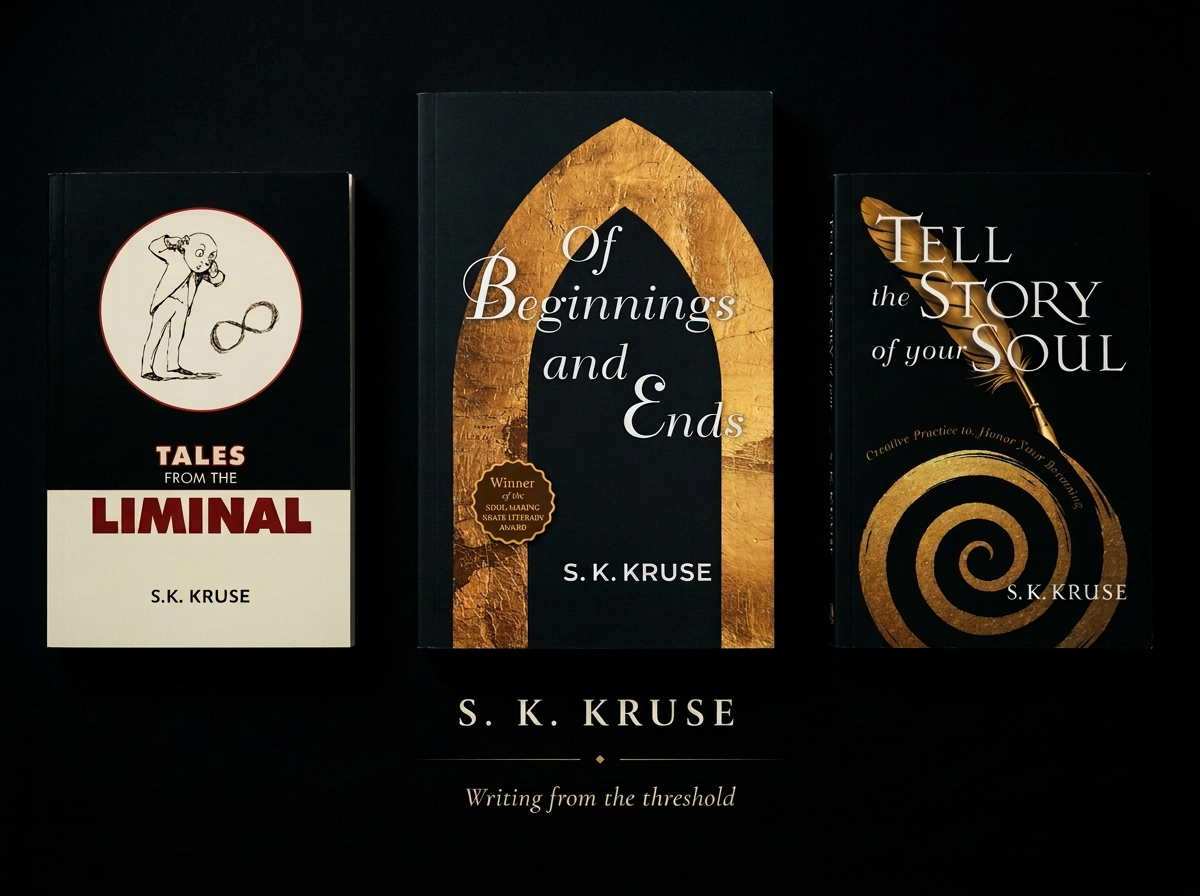
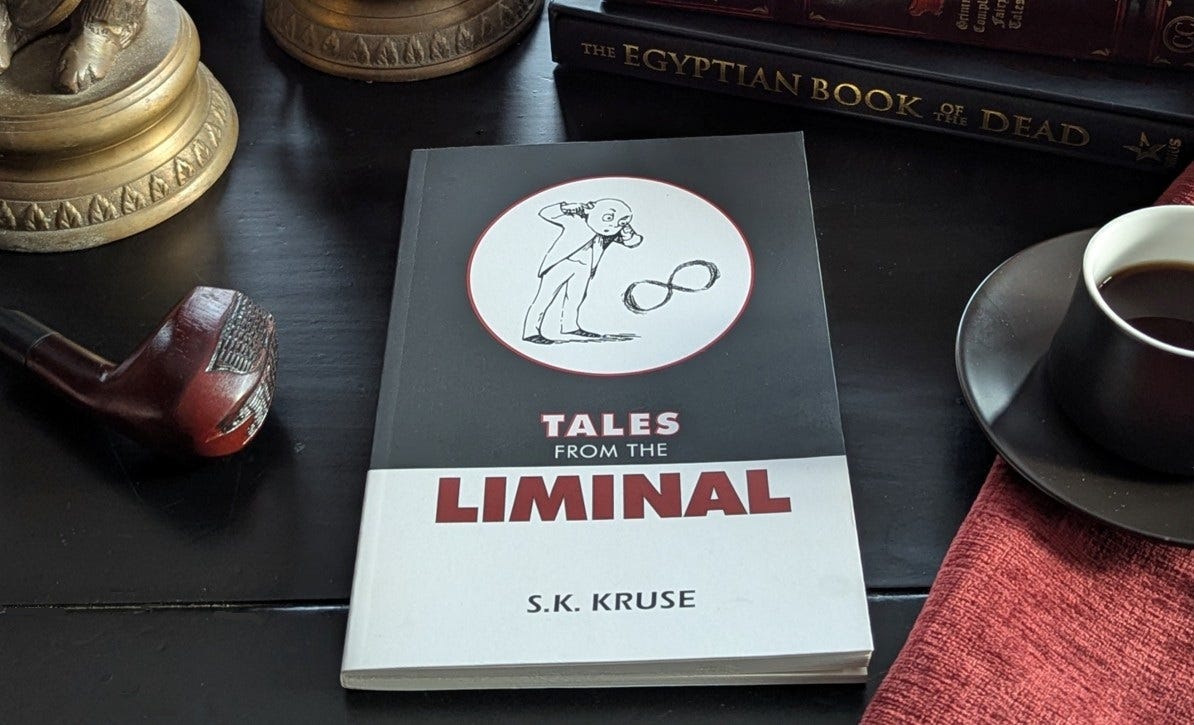
To mark the occasion and to celebrate the 5th birthday of the “delightfully strange and endlessly thought-provoking” Tales From the Liminal, Deuxmers has agreed to let me share one of my favorite stories from the collection, “Mistakes May Have Been Made.”
This story was written in the earliest days of the pandemic, when we, like the rest of the world, found ourselves at home with (half) our kids for an indefinite period of time. We decided to make the best of things by each doing something we’d been wanting to do but hadn’t had the time for. I had been wanting to get back into writing short stories, so that night I sat down in front of the fireplace with my laptop. I felt a little unsure after working on two novels for the past few years, but I had the phrase “mistakes may have been made” swimming around in my head, and then, almost immediately, I saw a pig wearing glasses in the glowing embers of the fire, and Horace, the insufferable, politicking pig, was born.

I’ve never had so much fun writing anything in my life. But I could barely keep up with him. His voice poured out of me, and I was little more than a bumbling Homo sapiens taking dictation. Maybe he’ll visit me again some day.
I hope he does.
You can listen to the story here or, if you prefer, read it below. Hope you enjoy!
Mistakes May Have Been Made
by S. K. Kruse
“’Tis a great honor in this extraordinary hour to address the noble porcine, bovine, hircine, and equine delegations among us. Let the record note the sheer number of representatives from the murine and leporine delegations—the ubiquity of our rat and rabbit friends never ceases to astonish. Let the record also note,” Horace added, pausing to assume a grave countenance, “that this honorable assembly is grieved—sorely grieved—at the departure of the canine from our coalition. It was, perhaps, always known deep down in our hearts that their true loyalty lay with the human devils. Nevertheless, it was a loss hard taken. There has since been the bandying about of blame and the sickness of second-guessing spreading like a cancer amongst certain factions of our cause. But let us acknowledge that intentions were good even though mistakes may have been made.”
Horace cleared his throat and pushed up his glasses. The delegates looked at him expectantly. Recent events had compelled him, however, to rely more than usual upon that liquid form of courage so dear to the human devils, so he took a moment to stick his snout into his bowl of beer to lap up some of the frothy malt, then snuck another look at the crowd. Good. His fellow pigs slurped up their beer as well, taking their cues from him. The horses, of course, stood still and silent behind them, tails twitching meditatively—the esteemed equine never imbibed. Or argued. Or cheered. As pacifists, they never did much of anything besides show up out of “solidarity,” a useless gesture as far as Horace was concerned. Frankly, they would’ve served him better, during recent trying events, as dog meat.
“But I dare say,” Horace continued with a point he knew to be popular with the masses, “that not a single member of this honorable assembly is distressed at the absence of the feline contingent. No, they were never part of this, by their own desire, it should be remembered. Too good for the rest of us. Too disinterested in the affairs of mortals. No. The felines were never part of this, but they could have been. They could have been part of this critical moment in history when Animalia omnia begin, at last, to take their rightful place alongside Homo sapiens sapiens.”
Heads nodded all around, and the pleasing murmur of consternated agreement filled the room. One of the bovines mooed, and Horace had to stifle a shudder. They always took the big table in front, blocking the view, masticating right there in front of everybody, mooing when they got too excited about things, forgetting to use their words. And the flatulence. It would linger within the dark, paneled walls of the tavern, infusing the fusty dankness with its fetor. Horace sighed interiorly. No, the bovines had not even been wanted in this coalition—their shared, historical industrial-farming trauma notwithstanding—but they’d been invited, nonetheless, by the asinine delegation, who, in yet another act of contumacious contrariness, had absented themselves from the Weekly Meeting for the drunken, braying funeral bash for Old Mad Jack.
Horace went on. “But this recent setback—the treachery of the tail-wagging traitors—shall not be counted as a loss, my friends. No, it shall be but vital documentation of a living struggle that will endure until its triumph at the designated time—”
The goats broke out in simultaneous bleats of protest, so Horace hastened to add, “of our own choosing!” He smiled emphatically, hoping it had worked. The hircines always took umbrage at any vocabulary that implied order or higher consciousness in the universe. It was a long story but, around the time the horses had gone metaphysical, the goats had gone material. It was the only way, they said, they could make sense of such a brutal world. This was all well and good, to each his own, et cetera, et cetera, but they had the irritating habit of calling Horace out whenever he waxed platonic or veered predestinarian. And to compound vexation with aggravation, they felt the incessant need to clarify to everyone around them that it was the natural sort of materialism to which they adhered, rather than the historical or dialectical. As far as Horace was concerned, however, it was all wasted smelly goat breath, for only horses and pigs could follow such arguments, and the horses had given up philosophical debate and the pigs didn’t care about philosophy at all.
But he needn’t have worried about a hircine haranguing because the avian delegation arrived just then and swept through the tavern, creating a colossal kerfuffle. Eventually, the sparrows lighted on the windowsill and the starlings settled on the rafters, prompting the pigs to pull their beers in closer. Horace grimaced. He absolutely needed the avians, but that didn’t mean he had to like them. Or trust them. With those wings of theirs, they were just too free. Who knew where they went when they left the Weekly Meeting? No one could follow them. And they were so condescending, always claiming superior knowledge with their “bird’s eye view” of things. Know-it-alls of the absolute worst order and, yet, jealous of his education. Some species just couldn’t stand a lettered pig. And the starling faction. Criminals. Every last one of them. When Horace first started his university, they’d flown overhead, doing their choreographed stunts and unleashing a blitzkrieg of their bowels upon his students, bullying him into a protection racket in which he’d been trapped ever since. He was so naïve back then, it was entirely possible—though absolutely unprovable since no paper trail existed—that mistakes may have been made.
Horace continued. “Be not overly discouraged by the incident at the mine, my friends. The rumblings of the Reckoning are being heard ’round the world. Fifteen seats have been won on town councils, eight on county boards, and the very first in our own state’s assembly!”
The pigs pounded their bowls on the table, sloshing their beer on the floor and their laps. “Hear, hear!” they cried. The starling faction did a fancy swoop through the rafters, both to show off and to make sure they’d been seen by Horace, who still owed them a month’s worth of grain. The bovines mooed. The goats, always eager for a chant, shouted, “Doc Bison! Doc Bison!”
Horace forced a smile. It was supposed to have been him in the state assembly—Professor Horace Yorkshire, the pig who’d started it all—and, yet, it was Doc Bison’s star that had somehow ascended. Sure, there were certain electability issues with Horace. His unfortunate, adolescent endorsement of the Porcines Are People Too campaign. His former affiliation with the now known predator, Wild Boar Bill. His controversial periplaneta agenda. If only the other delegates had been able to see the value of the cockroach constituency, for, outside his students, they had always been his biggest supporters.
“Today the state capitol, tomorrow the presidential palace!” Horace shouted over the din, inciting the crowd to louder, more vigorous cheers.
If only, Horace thought as he plastered a wide smile on his snout and lifted his front feet in the expected but ridiculous devilish gesture of victory, the canines hadn’t thrown their weight behind Doc Bison—a mere visiting lecturer from the Midwest. And then, to add insult to injury, after securing the nomination for that pompous windbag, those brown-nosing backstabbers had gone sniveling back to the devils. Horace never should have trusted them. A few impassioned speeches could never overcome the thousands of years of breeding and conditioning that had duped the dogs into that unholy alliance.
But oh, the agony! Of all the species to double-cross him! It had always been a particular source of bitterness to him that, though they were species of equal intelligence and affection, all those thousands of years ago, the dog had been chosen by those human devils for companionship and the pig for consumption. The inequity of it still astounded. Devils be damned! Perhaps his zeal for the cause had blinded him to the canines’ true allegiance, but, in his defense, he’d been distracted by the ill-timed affair of his wife with the handsome, virile boar from the south—his own graduate student—and, in such a stupor as he was at the time, mistakes may have been made.
“The fight will never be abandoned,” Horace continued, “until every living being on this planet has a voice in how it is run. Suffrage for all!”
The goats took up one of their impassioned but ill-crafted chants, “Speedboat the vote! Speedboat the vote!” An unpleasant bleating erupted from a pubescent billy, but his father headbutted him into silence.
Just then, the face of one of the human devils appeared in the window. Its horrid mouth opened and cried, “Justice for the plant world!”
The sparrows who’d been gossiping on the windowsill panicked and took flight inside the tavern, maneuvering in chaotic dips and reversals, causing mayhem in the crowd. The starlings took the opportunity to defecate in everyone’s beer, and a long, loud expulsion of methane erupted from a sheepish-looking cow.
“Suffrage for all means suffrage for all!” the devil shouted.
Where were the cockroaches when you needed them? Disgusting though they may be, an army of them would come in handy about now. But he hadn’t seen their leader, Crich, for days. Not since Horace’s “57-Point Plan for the Peaceful Cohabitation of Periplaneta With People” had been leaked. Perhaps Horace should have come down harder in the plan on the use of pesticides and gone easier on the repugnant habits of the roaches. Perhaps, when Crich had confronted him about it, he shouldn’t have tried to pass it off as fake news, since everybody knew that tactic only worked on the devils. Horace sighed but consoled himself with the knowledge that at least he was the kind of leader who could admit to himself that—in pursuit of the higher good, which was, truthfully, best secured through the advancement of his own political career—mistakes may have been made.
Meanwhile, the rats had taken advantage of the commotion to sneak off to the kitchen, while the rabbits struggled to keep their children in line. Why they didn’t just hire babysitters, Horace would never understand. The sparrows settled on the old piano, and one of the horses opened the door to let the methane out. The starlings sat smugly on a beam above. The devil was gone from the window but had left a potted maple on the sill with a placard that read, “Trees are Life!”
“Someone remove that pot!” Horace ordered, affecting concern for the feelings of the cows who had read the sign and now sunk lower in their seats. Everyone knew the sordid history of the two species—the cows had almost destroyed the earth in the 21st century and the trees had saved it. It didn’t matter that it was the devils who had purged the earth of its greatest air purifiers and who had multiplied the number of these misshapen, mooing, methane machines to mythological orders of magnitude—the cows felt the shame of it. Worse than any branding the devils had ever done in the flesh of any bovine was the branding of history. It was true that Horace could do more to lift the burden of shame they collectively carried, but it was also true that it provided a certain political advantage to him if they carried it. It kept them eager to please, grateful to be included. In short, it meant votes. And though mistakes may have been made along the way, this was most certainly not one of them.
Horace opened his mouth to continue his speech, but something caught his attention. A shifting of shadows on the side wall. A protracted, whispered rush that made everyone’s spine tingle, followed by a silent, hair-raising moment in which Horace recalled an ominous visit he’d received that morning from a delegation of Daddy Longlegs who’d made the long treacherous journey from the nation’s capital. He’d forgotten all about it, so many important things he had to do that day—preparations for the Weekly Meeting, an upcoming national election, his regular afternoon tryst with the sassy sow from the sociology department—but now, the single, airy, elongated syllable of which their entire message was comprised came back to him in haunting cadence. “Bombs!” they’d said over and over again, unable to provide any context because they never bothered to master the lingua franca—just bombs, delivered as though from the mouths of a Greek chorus. Then they’d departed as silently as they’d come.
Horace wondered if perhaps there was some connection, thought for a moment he should maybe share the information, but he had no corroborating intelligence, couldn’t afford any more political fallout, and, in the end, even if he had wanted to, he was unable to because a red-speckled hen squawked, “It’s the ghost of Old Mad Jack!”
This declaration sent the rest of the chickens running at random angles with no apparent destination, and an unpleasing murmur of consternated agreement filled the room. Horace gritted his teeth. As with the cows, he’d put up with the hens for the sake of their shared subjugation to the horrors of industrial farming, but the ignorance and superstition he’d had to endure! The unrelenting frustration as their pebble-sized brains habitually failed to grasp the larger picture. Case in point: If Old Mad Jack died in service of the cause he believed in—if the old ass fell headfirst into a shaft of the mine he may have been asked to blow up and broke all four legs and his neck in the process—Old Mad Jack would understand, postmortem—no matter what hircine philosophy had to say about the matter—that it was all for the good of the cause. And any creature who had a brain larger than a pea would know that under such circumstances of mutual understanding and camaraderie the old donkey would most certainly not come back to haunt them!
At least his fellow pigs understood. They knew what was at stake. What had to be done. Horace looked at them now, his faithful students leaning over their bowls of beer at their table in the back. Their subtle nods and wide-eyed admiration always gave him courage, but looking at them now, Horace faltered and felt the warm flush of shame as it occurred to him they might be privy to his wife’s indiscretions with the famed, former boar stud who now taught them “The Principles of Marketing.” That their wide eyes were not an indication of their admiration at all, but a fixed sort of glaze meant to obscure their new, true feelings.
Horace began to tremble. He leaned over his bowl to lap up the rest of his beer, but a large white lump of excrement floated in it. Perhaps his students knew that it had been he, in a crazed fit of rage and indignation, who had pseudonymously penned the articles in the Gazette, questioning Doctor Bison’s credentials and undermining the credibility of the election. Mistakes such as these may have been made but—the ghost of Old Mad Jack be damned—Horace was certainly not responsible for any of them. He was victim to forces beyond his control—the changing winds of politics, the unthinking mental migrations of the herd, accidents and infidelities, the black swans of life that could make or break a movement or a leader—and he didn’t care about that seat in the lowly state assembly anyway. He would run for President—the Professor of the Plains, his whore of a wife, his ingrate of a graduate student, the canines and the felines and the bovines and the hircines and the whole damned lot of them be damned!
***
Meanwhile, the cockroach delegation scurried away from the tavern where they’d been listening from the crevices of the paneling. It hadn’t been the ghost of Old Mad Jack at all that had sent shivers down the spines of the others, but the horde, exiting en masse when Crich gave the signal. They always did exactly what Crich told them. They believed in him, and that was all that was needed to get them through the events that were about to unfold. He would explain things to them tomorrow. After it happened. But should he forewarn the termites? Should he share with them the message passed along to him from his 18th cousin twice removed, living in the warm walls of the Presidential Palace? Crich pondered it all as the horde scuttled after him across the ditch and through the moldering leaves. He certainly wasn’t going to tell Horace and the others now. It was bad enough they hadn’t cancelled the Weekly Meeting to attend the old donkey’s funeral, but not a single word of respect? No moment of silence? Sure, Old Mad Jack was an ass, but he was a good ass. He, alone, had the common decency to share Horace’s degrading “57-Point Plan” with him.
As far as Crich was now concerned, they were all devils and, all the devils be damned, he and his kind would survive. They’d already survived 320 million years and they’d survive 320 million more, nuclear winter be damned. The roaches would inherit the earth! Though, apparently, the latest research indicated they’d have to share it with the flour beetles, and everybody knew how annoying they were. As the horde crawled up under the siding of their two-story house and Crich nestled into the best spot in the wall behind the stove, he thought about the message his cousin had sent. The devils were doing it today. If there was some way to warn the old devil on the other side of the drywall he might, but any previous overtures of friendship had been greeted with a spray can and a broom. No, Crich would just sleep now and rise to a new world order tomorrow. He would have to give a speech, of course. Perhaps in the basement of the old schoolhouse where thousands of the horde would already be congregated. He would lay out a six-point plan—six points because he liked the number six, because cockroaches had six legs—a six-point plan that would outline the future of their world. He felt excited just thinking about it. And a little guilty too, especially when he thought about their nearest relatives, the termites. But they were almost as irksome as the flour beetles, and besides, he told himself, he couldn’t stop the devils from launching their nuclear weapons. Foreknowledge did not equal culpability. And who listened to cockroaches anyway?
Crich settled more deeply into his prickly, yellow cushion of insulation and thought how if he woke up tomorrow and found himself king of the world, it would not be his fault at all. And when the others looked to him for answers, when they asked what had happened and how it all came to pass, he would explain that, regarding the devils’ stewardship of the earth, mistakes had definitely been made.
And, when word came that the termites had perished—if pressed as to the timing of his knowledge and whether any attempt had been made to alert their relatives so they might seek shelter in the depths of the earth—Crich would try first to pass it off as fake news. His followers were loyal above all else, so there was a good chance it would stick. But if that didn’t work, he would just banish anyone who dared criticize him and assure everyone else he was doing a tremendous job, acknowledging that, in times such as these—in times of such unprecedented upheaval—mistakes may have been made, but certainly not by him.
THE END
The entire audiobook is available on Audible. Print editions and the ebook can be ordered through Bookshop, Amazon, or your local bookstore.
Watch the additional video on Substack
A few people have asked what is the best way to support my work. I intend to keep my newsletter free, but you can always support any of your writer friends and acquaintances by reading and reviewing their books, and gifting them to friends and family. Thank you!