Between Worlds: An Icon Maker at the Front in Ukraine
I first met Hrytz in 2003, when he and a friend visited the U.S. as Ukrainian college students. Having come of age in the post-Soviet era, they were part of the exciting new Ukrainian Catholic University, rebuilding after decades of repression. They came to our house for dinner, young and full of life, looking to the future.
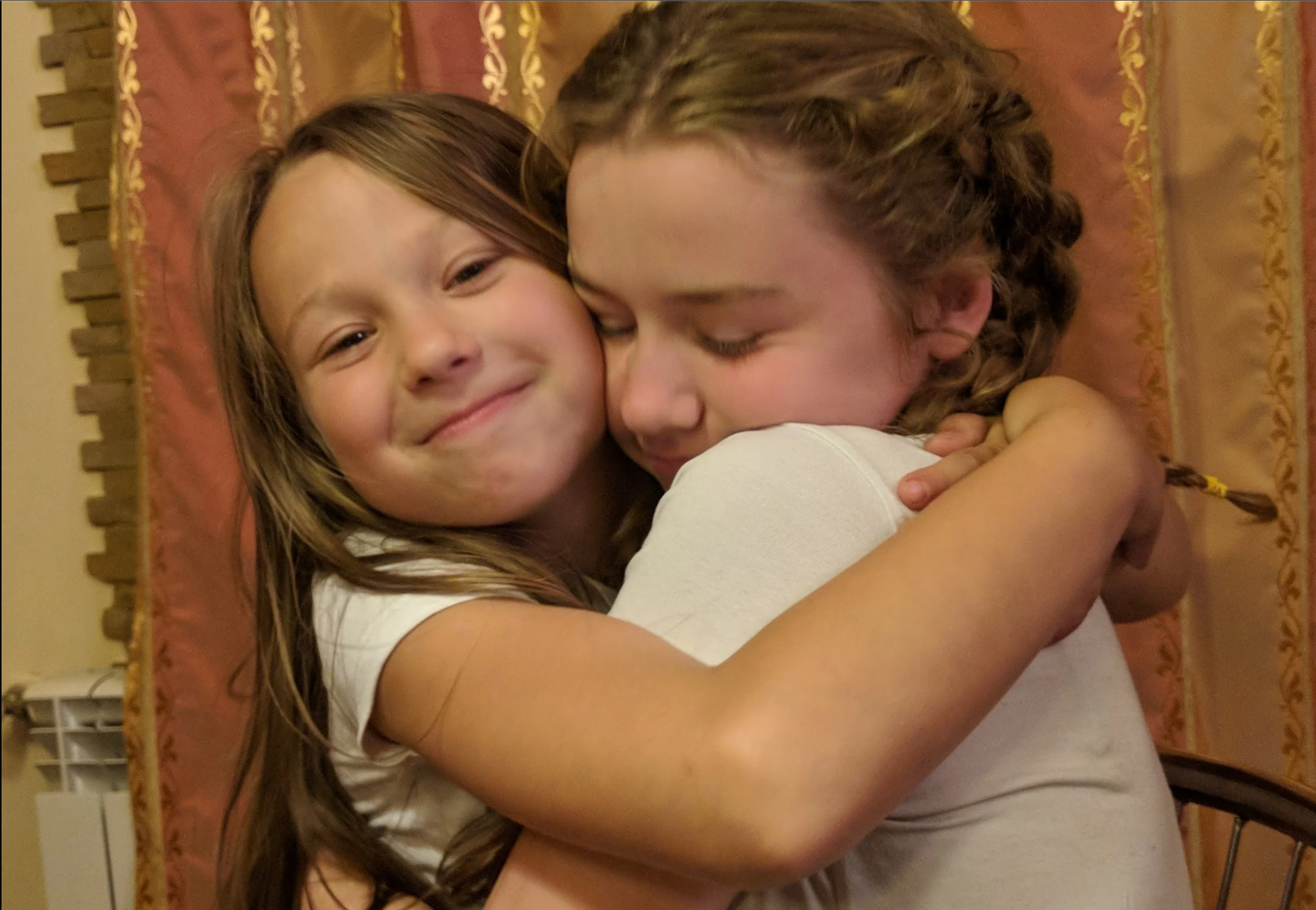
When I saw him next in 2018, he was an icon-maker raising three children in a country Putin never stopped menacing. Only four years earlier, the 2014 Maidan Revolution had prompted Putin to invade Crimea, host a sham referendum, and annex Ukrainian land. Even so, Ukrainians continued to rebuild their country. During the five weeks we spent in Lviv, our families bonded—our kids laughing and singing, just being kids together.
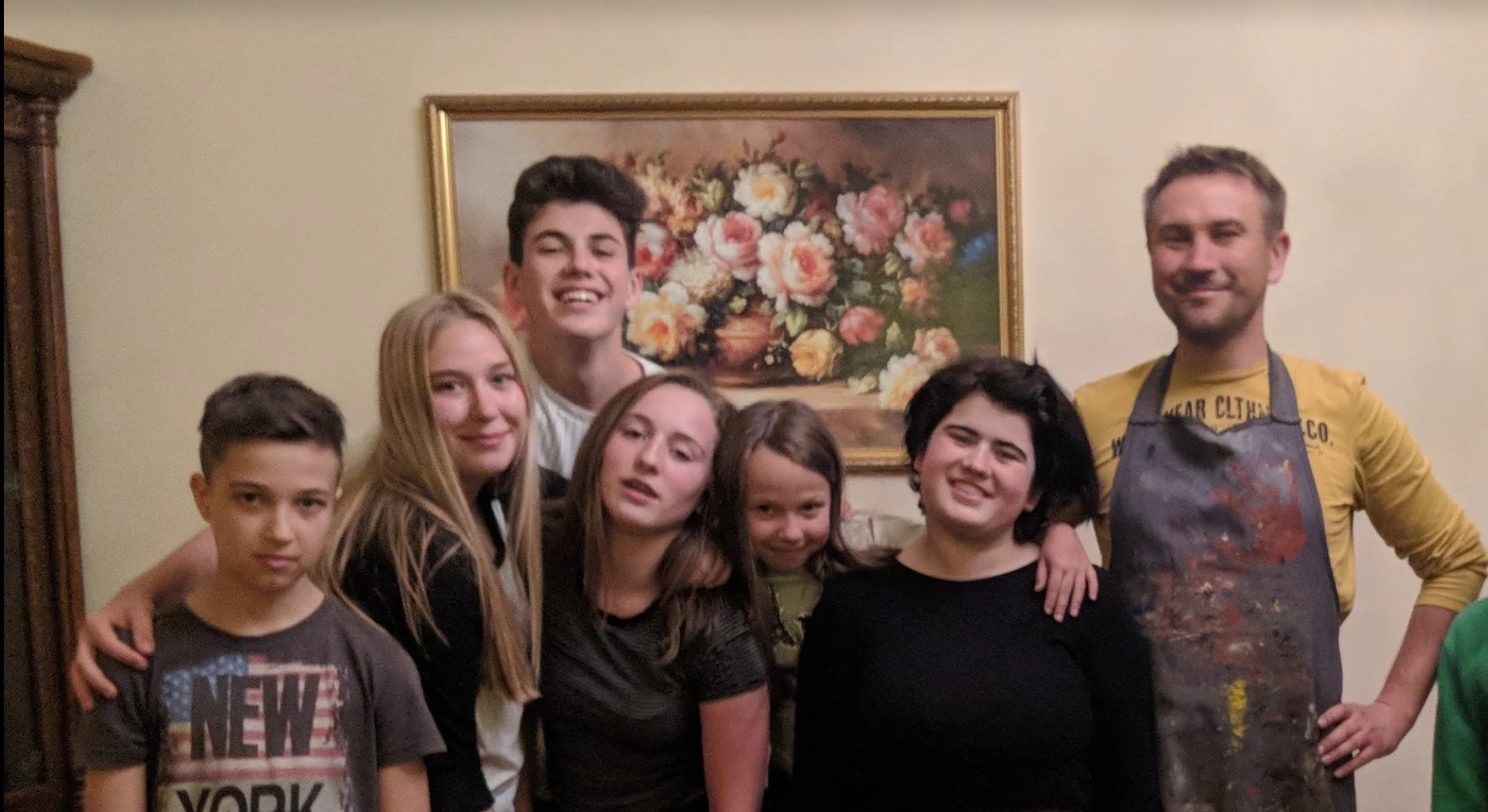
Then came 2022. Putin launched a full-scale invasion from multiple fronts, and Hrytz was sent to the front lines. On a rare two-week leave in October of 2026, he sat down for an interview with The Liminality Project, helping us try to understand what it means to live in such extreme liminality.
Transcript for Between Worlds: An Icon Maker at the Front in Ukraine
Hryhoriy “Hrytz” Prystay, interviewed by Jeffrey Wills
Lviv, 7 October 2026 · Recorded during a short leave from the front
A note on the text: Hrytz answered in English, which is not his language, and turned to Ukrainian when English ran out. His English is set down as he spoke it. Where he spoke Ukrainian, the original is given with a translation. Timestamps match the video.
[0:13] JEFFREY WILLS: Can you tell us how being an icon maker shapes the way you see what’s going on around you on the front?
HRYHORIY PRYSTAY: So hello, Sandy. Thank you very much for remembering me. And first of all, I just want to say I’m so sorry for my bad English, because I maybe probably I will don’t understand completely question, but I will try to answer.
Because for example, you see in a near front line, or in front line, you see very different faces. And of course, you can — so this is different faces can compare, can remind me some icons.
For example, I always remember situation when we live some village or town because frontline are very close, and we have an instruction order to leave this location. And for example, when we leave before like half a year with these people, and one morning you just put your clothes, your stuff to the car. And your neighbor — actually your old neighbor — see that you are leaving.
Right, my English, good?
JW: Yeah, okay.
HP: And this is face like remember me like the icon of suffering.
JW: Like the icon of suffering.
HP: [in Ukrainian] Ви їдете? (You’re leaving?)
JW: You’re leaving? You’re going?
HP: Yeah, and you don’t know what to tell to these people. And so actually, this situation reminds me like icons of the —
JW: Passion.
HP: Passion, yes. When Christ and His disciples didn’t know, and these faces, it reminds me.
JW: When the icon is a passion where the disciples don’t — like Mary and John under the cross, for example, yes.
[3:14] JW: Okay, second question. Icons are meant to be windows between worlds. Have you looked through any windows in there, in the objects and faces and moment?
HP: Yeah, it’s also a very interesting question, because for example, I thought about — like before war, for example, when I went through the street in Lviv, actually, especially in the winter, yeah? And you see when people look to you or see you, throw the window from the bus. And you know, I think in like say the same in a winter, this froze in a winter, yeah? And people look through the window, yeah? And for me, it’s very interesting. And actually, sometimes I wanted to make some photo project about this topic.
And also it’s the same situation in the frontline, because you know that in a war people have very clearly a feeling. So if they are angry, they are angry. If they are happy, they are really happy. So, they are as they are. Natural, yeah.
JW: They are as they are.
HP: Yeah, and this is very — yeah. Sometimes it reminds me. I like this.
JW: Okay. The faces and icons are calm. They’re outside of time.
[5:13] JW: Okay, what do faces look like at the front?
HP: Like in a daily life, it’s very, very different and very typical, yes. But I remember — for me, it’s a very, very expressive answer for your question: when you go on a car, and before you are going a truck with a soldier who are going to the front line, or for the storm —
JW: Okay, to the front line or to an attack, yeah.
HP: Yeah. And you like always, so they are sitting and they like see your eyes and you see them eyes, and in general like with a cigarette, and this very — they understand that maybe probably this is the last day of their life.
[6:57] JW: What does time feel like there? The waiting, the hours, the nights. What does time feel like?
HP: Yeah, I think maybe it’s like in a typical life. When you are happy or it’s like calm, time is quick. Normal, yeah. But if this time is really heavy, it stretches out very long.
JW: It stretches out very long.
[7:31] JW: What small rituals keep people human?
HP: For me, it’s very important, for example — probably for me it’s very important to listen to music in the front line, because it’s not normal life. But sometimes when I feel really bad I just walk. So if it’s possible, some days I can walk like 20 kilometers, and I try to listen different some different music, it depends from my mood of course. And this really helped me.
[in Ukrainian] Я розумію, що це може не відповідь конкретно на це питання… (I understand this may not answer the question exactly…)
[in Ukrainian] Де могло не бути? (Where could it not have been?)
So actually this is very interesting question. For example, I remember when we had preparing for our soldier life in Great Britain. So we had a lesson from mental health, and our teacher said that — remember, after war you will tsinuvate —
JW: You will value?
HP: Value, for example, sound of bird and sunset and some smiling of children, much more valuable.
JW: Much more valuable, yeah.
HP: And you know, for example, that I didn’t know how it will be after the war. But now when I came actually to Lviv, I never have depression or something like that. So you always feel happy, because you understand that you are alive, and you have happiness from small things.
[10:26] HP: [in Ukrainian] Можливо, розуміння, відчуття святого. (Perhaps — the understanding, the feeling of the sacred.)
JW: Has it changed? Have your thoughts or feelings changed since you went?
HP: [in Ukrainian] Думаю, так. Мабуть, перед війною… розуміння святості пов’язане найперше з церквою. (I think yes. Probably before the war… holiness is connected first of all with the church.)
But now, I think maybe it’s like the first of all is humanity, yeah. Because it will be a good my answer because, for example, a lot of my friends who are priests or in a church, they are not in the front line. And a lot of people who are now in the front line, they are not religious, but they sacrifice health, time and life. And for me, maybe it will change, because it’s not only words, but action.
Sorry for my English.
[12:07] JW: Is there anything that you carry inside you that helps you navigate the uncertainty — the extreme uncertainty of your life right now?
HP: I don’t understand.
JW: So now there is a lot of uncertainty in your life, and do you have something in between that helps you with this situation of uncertainty?
HP: I think that a lot of people have this uncertainty. 100% is that in perspective everyone will die in the future. Everyone will die, and everyone has different way of life. And it’s like hard to believe that even in a war people can feel happiness and some different thing. And people get used to it.
JW: So people, men get used to it. They get used to everything.
HP: Yeah.
[13:51] JW: Do you feel you live between two selves? Between the icon maker in the workshop and the soldier? Or has the war made them one?
HP: Of course that this is like different two worlds. And like it’s two different worlds, because Lviv and Donbas, it’s different worlds. And of course, for example, two families — well, for example, father are in a war, and some other family where our father is not. And also, for example, where our father died. Yeah, so this is too many different worlds.
JW: Okay, do you feel you are two different people here and there, or is it one person?
HP: No, I think maybe the same person.
[15:07] JW: Okay, you’re on a two-week break right now. What is it like to step out for two weeks and then to go back to the front? What does it mean to go back to the front?
HP: It’s like maybe it’s hard to say from one side. But if actually simple, simple answer — so you always want to back home, and this is normal, and you came and you’re happy. But it’s always happened like few days before you come to the front, you have not good mood.
But actually what I want to say is that when I’m in the front line, I always think about friends and family here. But when I come to Lviv, for example, I always remember my comrades, yeah. My fellow soldiers. And because it’s sometimes — so actually, when I last times when I come to Donbas, I wrote to my wife, “So I’m at home.” And I’m always think that’s my home. Sorry. But my family and my home, like…
JW: Because you’re there for years.
HP: Yeah, yeah, yeah.
[17:01] JW: What would you want someone to understand about the front that the news can’t show them?
HP: I think that maybe — so in a front line we have different thing, is that it’s hard to explain. For example, how you can explain… fear. Fear of rockets or bombs attacks. You can’t explain this.
But in a different — but from other side, in the front line, like everywhere: sun, very blue sky in a Donbas, really, and a lot of birds sound, and normal life. And Donbas is really beautiful. So it’s different, different things. It’s like, how can you explain life in Africa or Niagara Falls? So you can explain, but maybe the best way to come.
Sorry.
[18:21] JW: Okay, is there anything I didn’t ask you that you’d like to say?
HP: Probably I have a lot of things to tell you about my life there, but it’s hard to recall.
[in Ukrainian] Колись, як Сенді приїде, то ми обов’язково поговоримо і поїдемо на Вільний Донбас. (Someday, when Sandy comes, we will certainly talk, and we will go to a free Donbas.)
With thanks to Hryhoriy Prystay, who spent part of a short leave answering these questions in a language not his own. And to Jeffrey Wills, who asked them.
Produced by S. K. Kruse for The Liminality Project. This piece first appeared at theliminalityproject.org on October 16, 2026.
Join my free newsletter
Posts come about twice a month to your inbox or Substack app — always free.
S. K. Kruse is the author of Tales From the Liminal, Of Beginnings and Ends, and Tell the Story of Your Soul. She is the co-curator of The Liminality Project and founder of The Liminal Essay Contest. She is available for workshops, discussions, and retreats. Find out more about S. K. Kruse’s books and projects here.