Liminal States: Wandering in the Borderlands Between Who You Were and Who You Are Becoming
This post is a part of a series based on my presentation, Betwixt & Between: Discovering the Gift of the Liminal.
To find out more, visit The Liminal Hub.
Your job ends.
Your marriage dissolves.
Your diagnosis arrives.
Beliefs that once held your world together begin to crack.
You may look like the same person from the outside.
But the arrangement of your inner world has changed.
You are no longer quite who you were.
But you do not yet know who you are becoming.
Welcome to the liminal state.

Image from Unsplash via Squarespace
What Is a Liminal State?
Liminal states occur when we become suspended at an existential or psychological threshold—between identities, roles, or ways of understanding the world. Liminal states are sometimes also referred to as “times” or “seasons” because they unfold over time. They may:
arise through the passages of a human life—life-stage liminality
be triggered by external events — external liminality
emerge from internal change — internal liminality
Sometimes we choose liminal states.
But, usually, we don’t.
Often, the three types of liminal states converge.
A life-stage or an external upheaval almost always catalyzes something internal. And sometimes what’s stirring inside us eventually cracks open—or blows up—our outer life as well.
Thomas Moore calls these liminal states dark nights of the soul, an image with a rich heritage in the Christian tradition. In fact, it was Moore’s book, Dark Nights of the Soul (Penguin Random House, 2005), that introduced me to the liminal, twenty years ago. Understanding its role in human experience was so revelatory for me, I’ve never been able to let it go.
I hope you’ll find it helpful too.
Life-Stage Liminal States
Life-stage liminality is the oldest identified type of liminality that we have, thanks to the work of Arnold van Gennep at the turn of the 20th century. The passages of our human life can place us between one identity or role and the next. Pregnancy and new parenthood, adolescence and menses, midlife and menopause, aging and dying can all involve extended stretches in which an old way of being is passing away before the new one has fully taken shape.
Here’s a look at some of the challenges we encounter in life-stage liminality:
The Body Has Its Own Liminal Clock
Some passages are entered willingly, such as becoming a parent or choosing to retire, but puberty, some pregnancies, menopause, and aging arrive whether or not our psyches are ready. Often there’s a gap between physical change and inner readiness—our biology moves first, and our identity has to catch up.
Ritual In Modern Times
Traditional rites may have done a better job than modernity at bringing clarity and community to life-stage liminality, but they came at the cost of rigidity and, by our modern standards, coercion.
Modernity seems to reverse the trade — offering freedom and flexibility, but, perhaps, at the cost of psychic impact.
Take for example, a coming-of-age passage, which many traditional societies marked for boys with ordeals—wilderness seclusion, scarification, circumcision, and tests of endurance. For girls, the passage was 0ften marked by menses—sometimes with related rituals — often followed soon by marriage, with no say in the matter.
The upside of these traditional rituals was that no one was left wondering whether or not they’d crossed over, but the downside was that the crossings — at least by our modern standards — could be forced, brutal, and traumatic.
Modern life keeps the ceremonies but drains the ordeal— and the trauma. Graduations, confirmations, quinceañeras, as well as bar and bat mitzvahs, still mark the moment, but they're mostly celebratory.
My question is, if there's a ceremony followed by cake and a party—but no trial to go through—is it enough to help our psyches make the crossing?

Image from Unsplash via Squarespace
Perhaps in our modern world, the social-emotional upheaval of adolescence is enough.
Just think back to middle school….
And high school….
“Wilderness seclusion” anyone?
“Tests of endurance?”
External Liminal States
External liminal states are sometimes of our own choosing, like when we take a gap year, sabbatical, pilgrimage, or retreat, or when we move or make a deliberate departure from a career. But usually they are forced upon us by external events, such as war, displacement, natural disaster, or the more personal earthquakes of a family death, prolonged illness, or partner walking out the door. They tend to trigger a loss of control and certainty—a sudden disruption that strips away our old identity before a new one has a chance to form.
The following are some common characteristics of forced liminality:
Sudden Disruption
The change may arrive before we are ready.
One phone call, diagnosis, decision, storm, dismissal, or death divides life into before and after.
Our body and mind may continue expecting the former world even after it is gone.
Loss of Control
The transition is imposed on us by circumstances we did not choose.
Certainty and stability are stripped away by forces outside us.
The first task may not be growth or meaning.
It may simply be survival.
The Old Identity Is Gone
A role, relationship, home, community, or source of meaning disappears before a replacement exists.
Who am I without this person? Without this work? Without this body? Without this place?
The old answer no longer works.
The new one has not arrived.
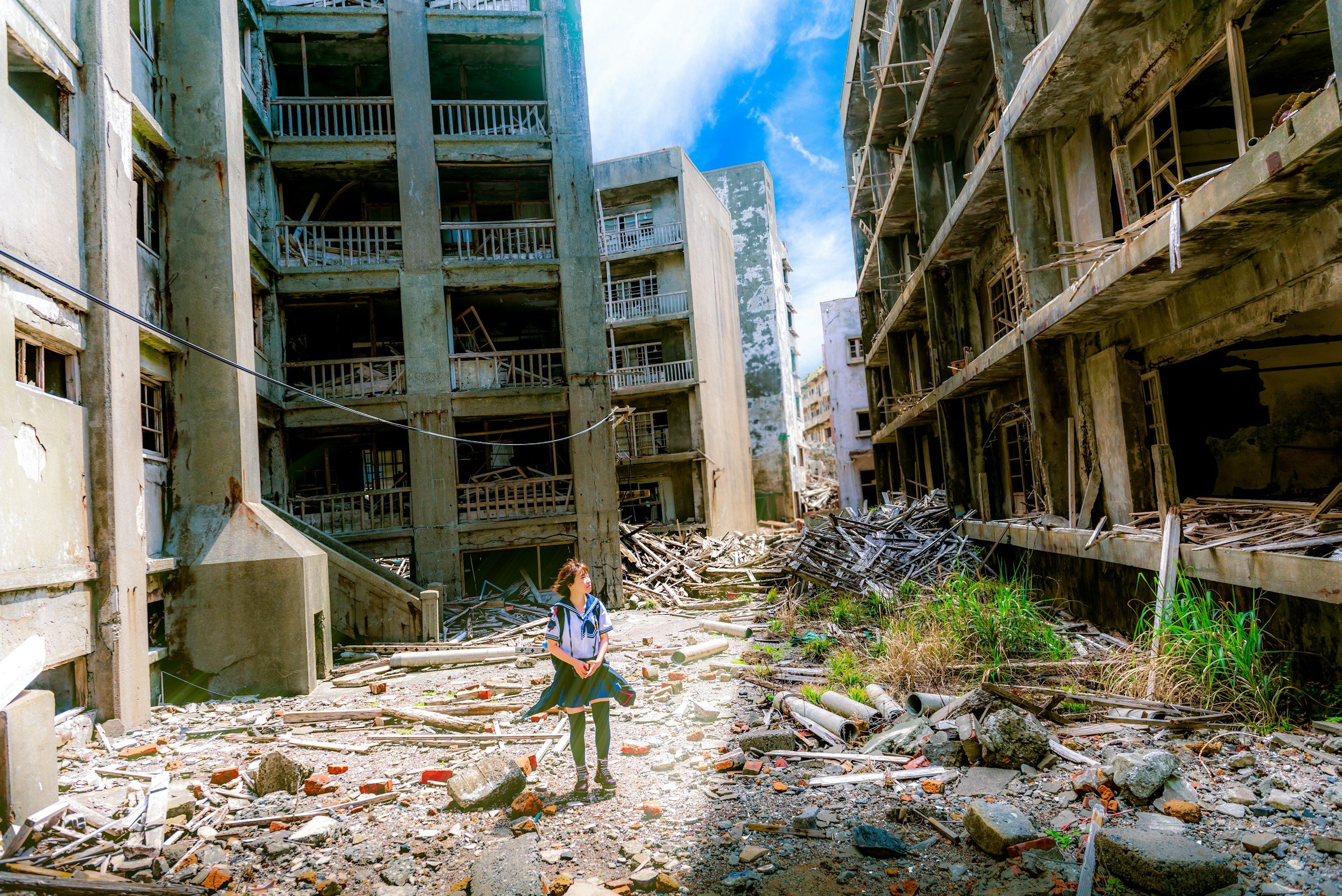
Image from Unsplash via Squarespace
Internal Liminal States
Some internal liminal states are chosen through solitude, therapy, retreat, pilgrimage, or sabbatical. But others emerge from within—a nagging question we can no longer ignore, a spiritual crisis, identity shift, or midlife reevaluation.
These transitions may be nearly invisible from the outside.
A person may continue going to work, preparing meals, answering emails, and making polite conversation— all the while their worldview is coming apart inside.
The decisive event is interior.
Something inside no longer agrees to remain as it was.
Here’s a little bit of a deeper dive into a few of the more common ones.
Spiritual Crisis or Awakening
A spiritual crisis may begin when our inherited beliefs no longer make sense of our lived experience. The old language becomes inadequate. The old answers feel too small. This may leave us suspended between belief and unbelief, belonging and exile, certainty and mystery. It’s not always a loss of faith — sometimes it is the painful dismantling of one form of faith before another becomes possible.
Identity Shifts
Identity may become liminal when we begin questioning who we are within a relationship, career, family, community, culture, or social role. The shift may be chosen or it may be discovered. It may arise because our previous identity became impossible to inhabit.
We may know what no longer fits before knowing what will.
Midlife Reevaluation
Midlife reevaluation may arrive when the goals we spent decades pursuing suddenly feel hollow, or when the awareness of time remaining eclipses the time already spent. The questions turn from how do I succeed? to what was this all for? We may find ourselves grieving the roads not taken while no longer certain the road we're on is ours—suspended between the life we built and the one we can still feel calling to us.
Why Liminal Persons Can Seem Threatening
Liminal persons do not fit neatly into the categories by which a society defines itself.
They may be neither insider nor outsider.
Neither child nor adult.
Neither married nor fully disentangled.
Neither believer nor unbeliever.
Neither part of the old community nor established in the new one.
Societies rely on recognizable roles, boundaries, and identities, and the ambiguity of liminal persons unsettles the social order. They blur distinctions and categories, so they appear confusing, disruptive, or threatening to others.
Categories and Chaos
Because liminal people are betwixt and between, they challenge the idea that social categories are natural, fixed, or permanent.
They embody transition, and transitions contain unpredictability.
A society committed to stability may interpret such ambiguity as chaos.
The liminal person becomes a reminder that the established order can change.
Social Pollution
Anthropologist Mary Douglas examined how cultures often treat ambiguous people, objects, and conditions as forms of pollution or danger.
What does not fit the expected category may be isolated until order is restored.
In many traditional rites of passage, people in the liminal phase were separated from ordinary society until their transition was complete.
They were not necessarily considered evil.
They were considered unstable.
Their status was unresolved.
Sacred but Dangerous Power
In some rituals, liminal persons are understood to possess a sacred but dangerous power.
They stand outside the usual structure.
They may have access to possibilities unavailable to those firmly established within it.
The initiate, mystic, exile, artist, outsider, and wanderer often occupy this ambiguous position.
They inspire fascination and suspicion.
A person who carries change may be perceived as dangerous by a society that fears change.

Image from Unsplash via Squarespace
The Pain and Power of the Liminal State
No need to sugarcoat it.
We all know liminal states are hard.
When you’re in one, your old identity and sense of safety are gone, and a new one hasn’t yet arrived. That gap is filled with uncertainty, grief, disorientation, longing, helplessness, sadness, and sometimes real anger, but the incredible thing about them is this:
Liminal states carry the seeds of transformation.
The very deconstruction that feels so destabilizing in our lives is what makes room for something new.
New beliefs.
New identities.
New ways of being in the world.
That’s the power of the liminal—that the darkness is not just the end of something, but the threshold of a new beginning.
the power of the liminal is that the darkness is not just the end of something, but the threshold of a new beginning.

Image from Unsplash via Squarespace
Some Questions to Carry With You
When were you last in a liminal state?
Or are you in one now?
What has ended?
What has not yet begun?
What might be asking to emerge?
Continue Exploring the Liminal
Return to the main hub: What Is the Liminal?
Continue to: How to Navigate a Liminal State (Coming Soon.)
Explore S. K. Kruse’s many other projects!
